
Description
Technical Overview
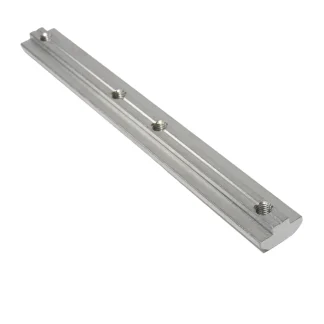
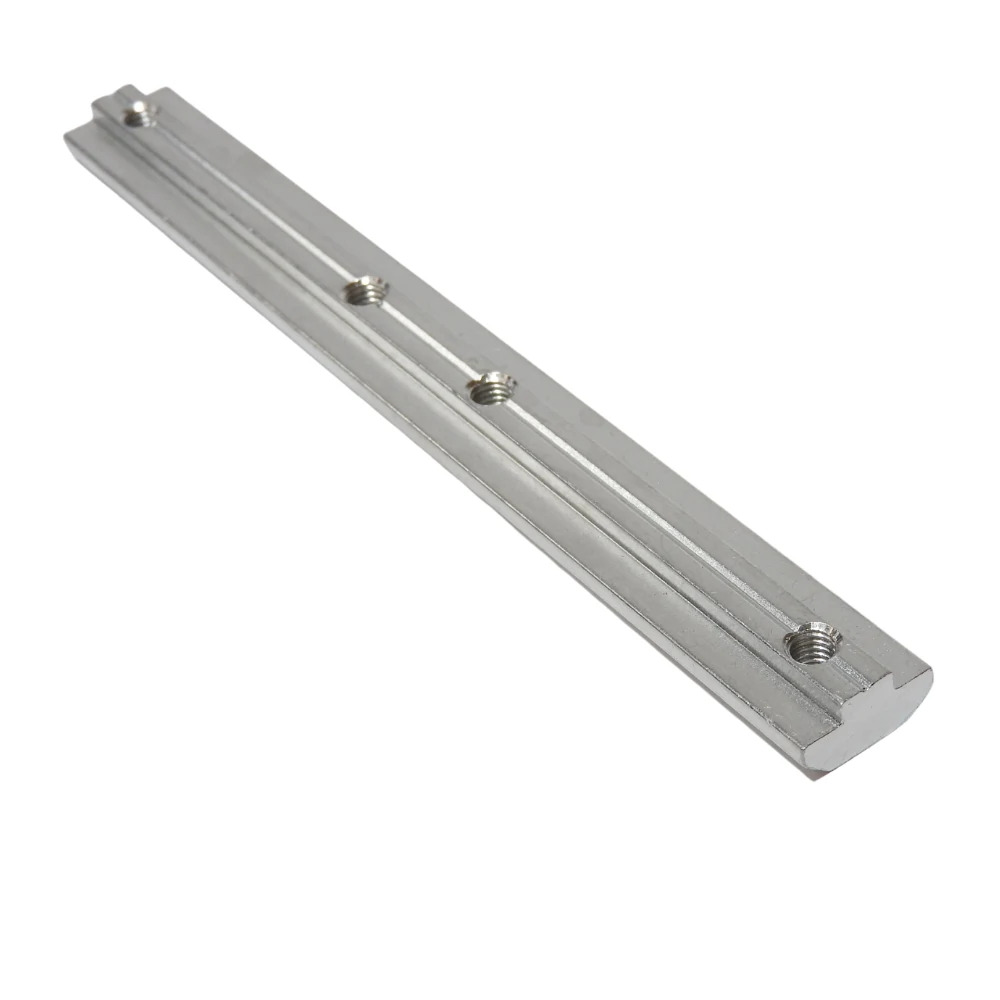
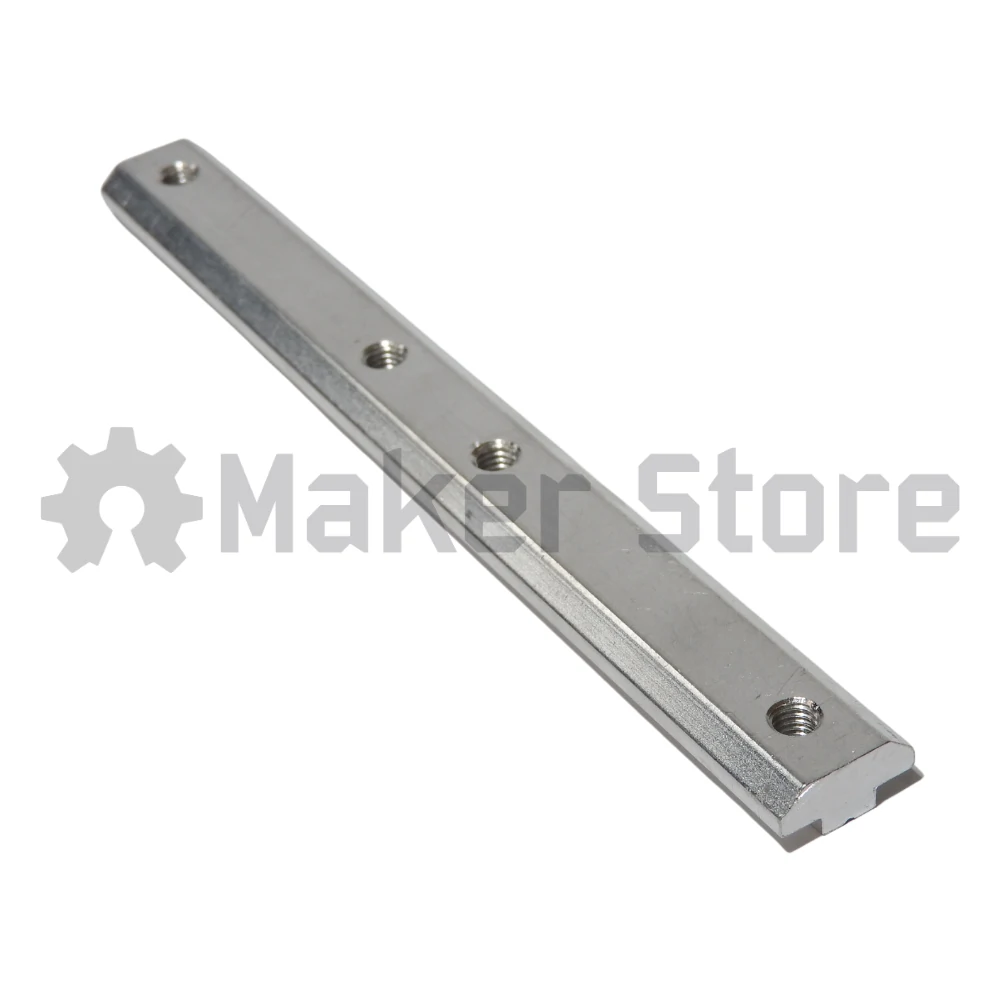
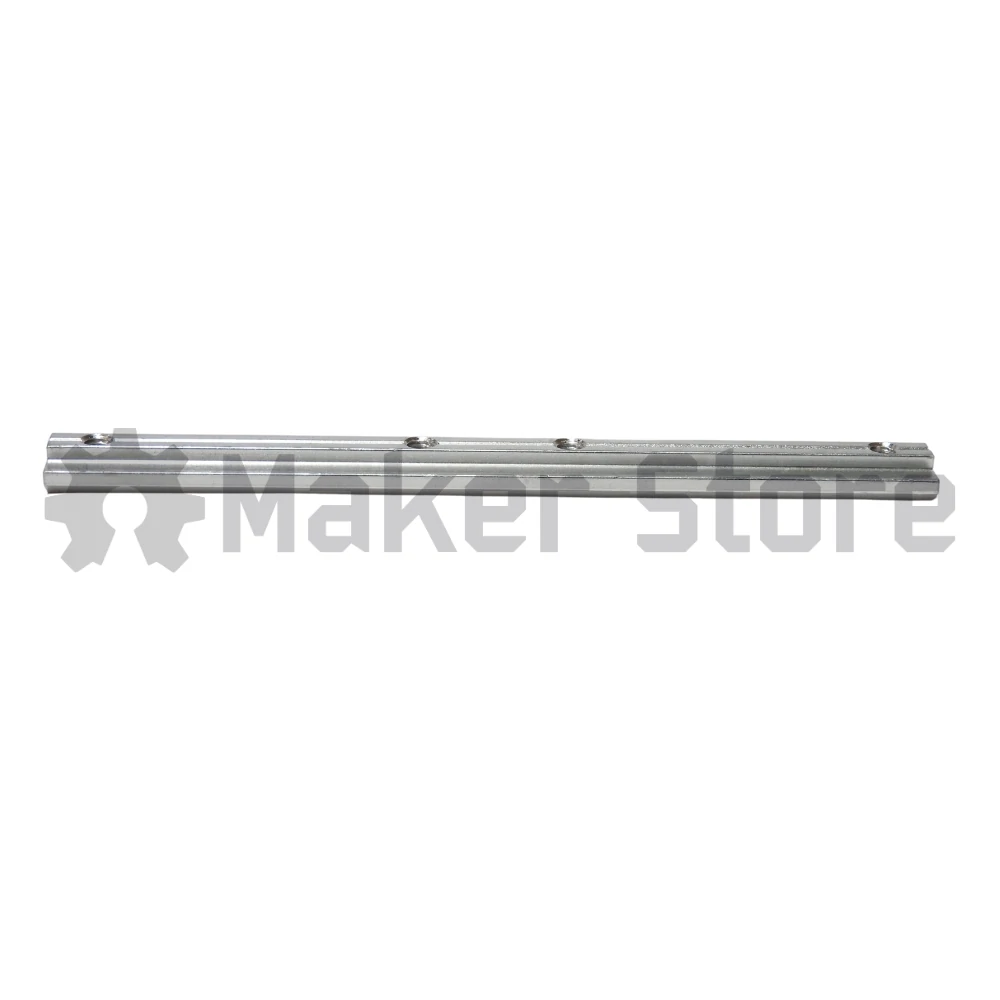
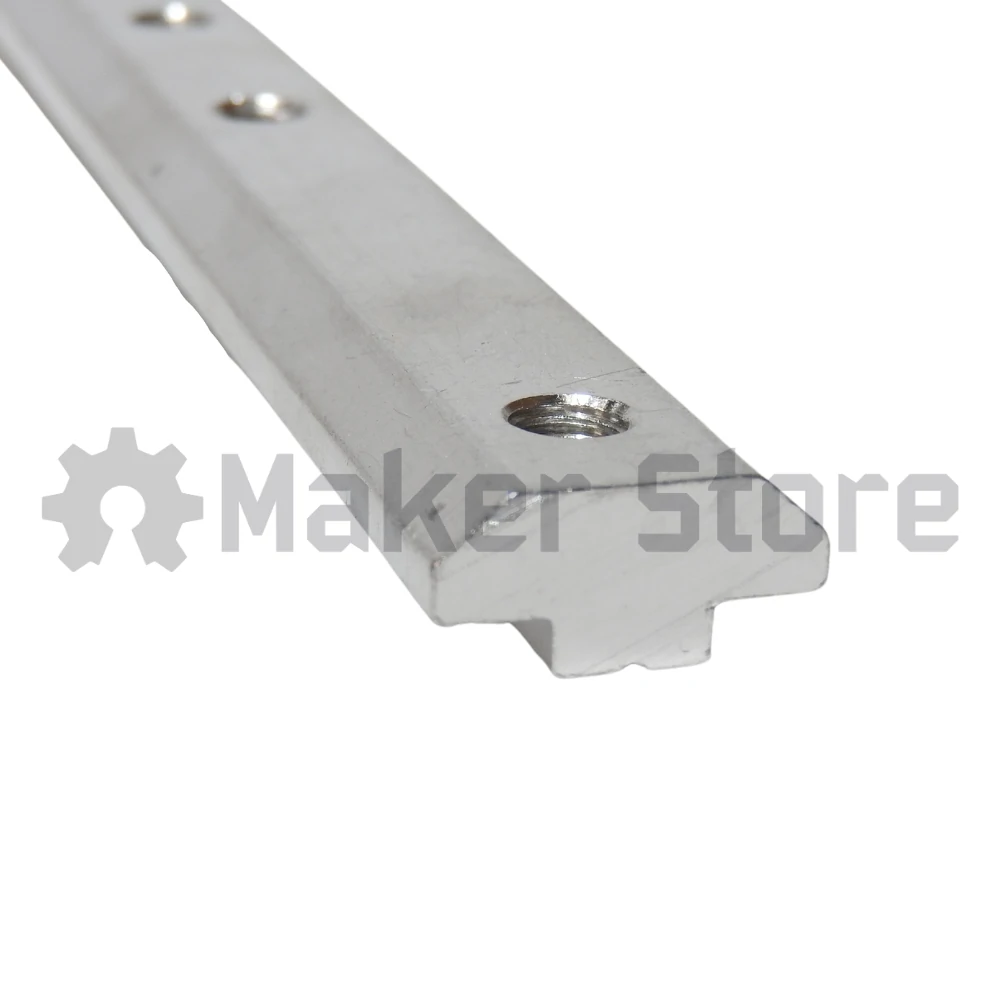
The 180-Degree Inside Connector – 40 Series provides a linear structural coupling. Specifically, this hardware creates continuous end-to-end extensions within modular extrusion assemblies. To form the inline connection, the user slides the bar directly into the internal T-slot channels of two abutting profiles. Consequently, the joint preserves perfect framework alignment. In addition, this internal mounting configuration leaves the outer faces of the structural assembly entirely unobstructed. As a result, the system allows for flush multi-axis profile positioning and unhindered movement along linear tracking lines.
Furthermore, a cast zinc alloy forms the structural body of the connector. This material choice provides necessary mechanical strength under linear tensile loads. To protect against environmental corrosion, the manufacturer applies a nickel-plated surface finish. This coating also reduces surface wear over time. To secure the connection point, the assembly incorporates integrated set screws. These screws pass through the connector body and lodge firmly into the base of the T-slot profile tracks. Ultimately, this mechanical anchoring mechanism creates a rigid friction lock. This lock prevents axial sliding, rotation, or joint deflection without requiring face-plate drilling or external bracketry.
Applications
Mechanical engineers and industrial framework builders deploy the 180-Degree Inside Connector – 40 Series to achieve precise end-to-end profile alignment. Primarily, they use this hardware to span extended lengths. The unit sits completely inside the profile core during use. Moreover, the connector features full compatibility with 40 Series T-Slot linear aluminium extrusions. Therefore, typical structural applications include extending long-run automation tracks and structural frame posts. Builders also choose it for material handling conveyor rails and large-scale machine enclosures.
Furthermore, technical designers utilise this internal connector in modular workstation builds. It functions effectively in custom storage racking systems and precision linear guide assemblies where external mounting plates would interfere with moving components or panels. To complete the mechanical installation, technicians slide the nickel-plated zinc alloy bar equally into the open T-slot channels of both profile sections. Next, they align the connecting seam. Finally, they tighten the integrated set screws down onto the internal aluminium profile walls to anchor the complete assembly.
Technical Specifications
Drawings
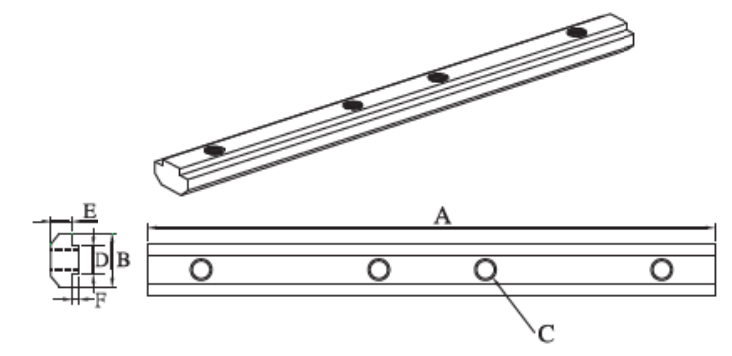
| A | B | C | D | E | F | kg |
| 180mm | 19.5mm | M6 | 8mm | 6.4mm | 3mm | 0.0614 |
Maker Store Tips and Tricks
-
Ensure the mating ends of both 40 Series extrusions are cut perfectly square ($90^\circ$) and deburred to achieve a completely gapless linear extension.
-
Tighten the internal set screws progressively and evenly on both sides of the joint line to prevent drawing the profiles out of axial alignment.
-
For heavy load setups or high-vibration applications, consider pairing this internal connector with an external joint plate to provide redundant structural reinforcement.
What makes T-Slots such an easy assembly task?
Building frames out of T-Slot extrusions is easy because they eliminate the need for specialized tools or welding, simplifying the assembly process. Building frames using T-Slot Linear Rail will require;
- 40 Series T-Slot Extrusions: These are the main structural components, usually made of aluminium, with slots along their lengths that allow you to easily connect various parts and accessories.
- 40 Series Brackets and Connectors: These are specialized components designed to fit into the T-Slot extrusions and secure them together at various angles. They include brackets, T-nuts, L-shaped brackets, and other connectors.
- Fasteners: You can use Bolts, screws, and nuts to attach brackets and connectors to the T-Slot extrusions.
- Tools: Basic hand tools like wrenches, Allen keys (hex keys), and screwdrivers are necessary for assembly. Additionally, you can easily cut the T-Slot extrusions to your desired lengths using an aluminium saw.
Unsure if this product is compatible with our aluminium extrusions?
Look for the Maker Store Compatibility Badges!

The badge above indicates that this product is compatible with our 20 Series Extrusions 
The badge above indicates that this product is compatible with our 40 Series Extrusions