Linear Actuators Simplified
Linear actuators are mechanical or electronic devices that convert energy into motion. It is used to control or move a mechanism, system, or process. Linear actuators are crucial components in various applications such as simple devices like household appliances, complex industrial systems and robotics.
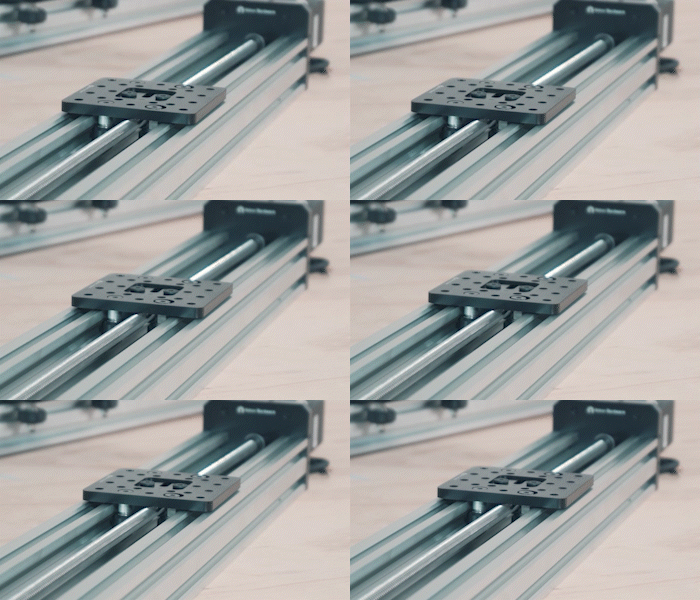
In a world driven by automation and efficiency, linear actuators have emerged as true game-changers.
With their ability to convert energy into linear motion, these powerful devices have revolutionised various industries, from manufacturing and robotics to aerospace and healthcare. Not only industries but DIY enthusiasts have also started embracing these mechanical systems to automate different activities for enhanced productivity.
One example is the use of linear actuators to create linear sliders for cameras. You can mount your camera on the gantry plate of the actuator and use a motor to slide the camera along the length of the actuator. The Linear Actuators are also used in 3D Printers and CNC machines to guide the movement of tools and workpieces.
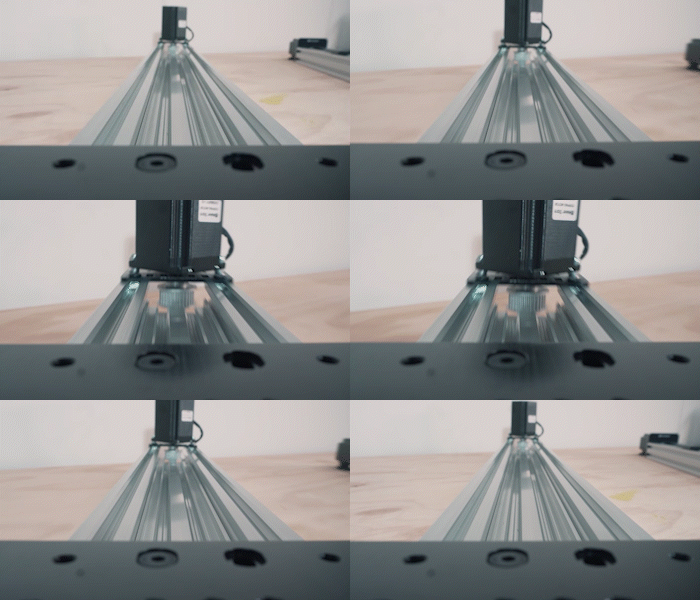
At Maker Store, we have designed and developed different linear actuators that can be used for several applications. We have belt-driven actuators and lead screw-driven actuators. All these actuators are made from the popular V-Slot Aluminium Extrusions. These V-Slots acting as the structural components have revolutionised the industry.
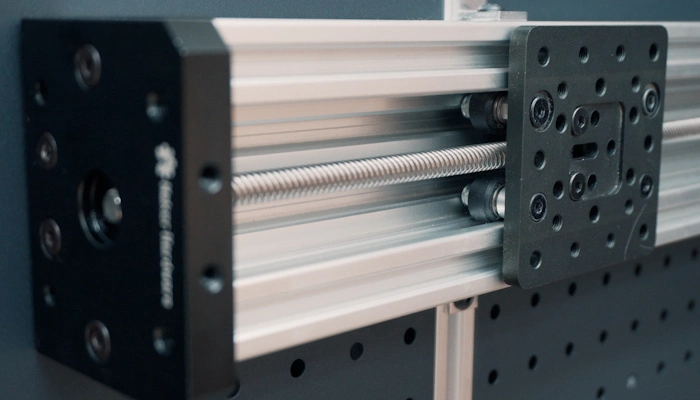
The Main Components Of V-Slot Linear Actuators Are
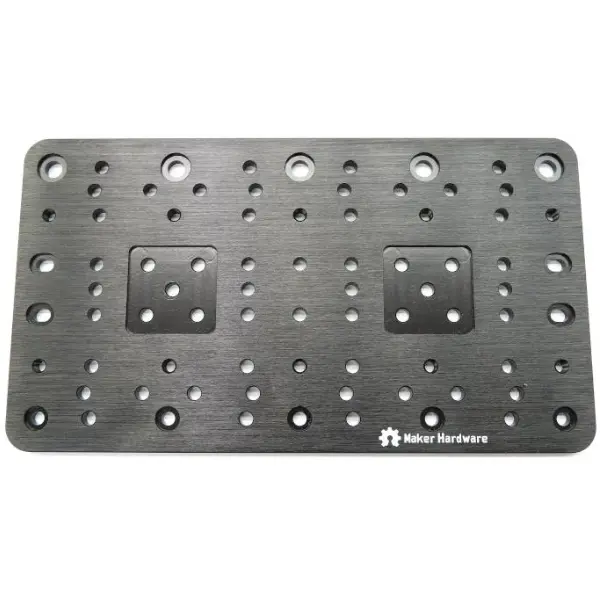 Gantry Plates are aluminium plates that can be used to mount equipment such as a camera onto the actuator. The Gantry Plate moves along the length of the actuator with the help of a transmission system. Among several other applications, Gantry Plates are widely used in CNC (Computer Numerical Control) machines as part of the gantry system. They provide a stable and rigid structure to support the moving elements, such as the X, Y, and Z-axis components.
 The transmission system of a linear actuator is a crucial component that converts rotational motion into linear motion, enabling precise and controlled movement. Linear actuators typically consist of a motor and a transmission system, which work together to provide linear motion of the Gantry Plate. The different kinds of linear actuator transmission systems are:
Lead Screw and Nut Block
The Lead Screw is a threaded rod with helical grooves wrapped around it. The Lead Screw is paired with a Nut Block that has matching threads, and when the screw is rotated by the motor, the nut moves linearly along the Lead Screw’s axis. The Gantry Plate is attached to the Nut Block via Low Profile Screws and moves linearly along with the Nut Block. These are generally used in applications where precision and cost-effectiveness are essential.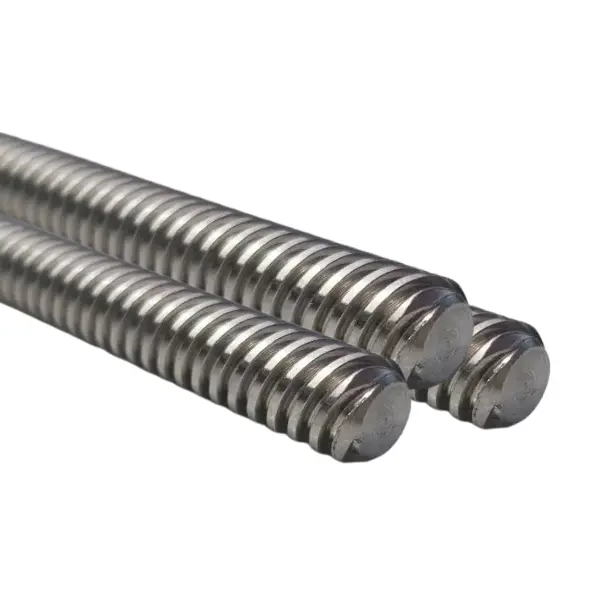 Rack & Pinion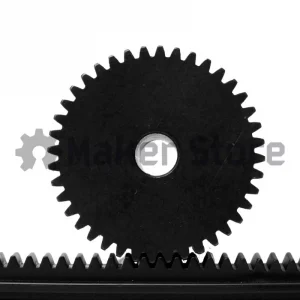
The rack is a straight, toothed bar or gear with linear teeth running along its length. It resembles a flat and elongated gear. The teeth on the rack mesh with the teeth on the pinion. The pinion is a small, round gear with teeth that engage with the teeth on the rack. It is typically mounted on a rotating shaft, such as that of a motor, which provides the rotational motion. Rack and pinion systems can provide efficient linear motion conversion due to their meshing teeth, resulting in minimal energy loss during the transmission process.
Belt & Pulley
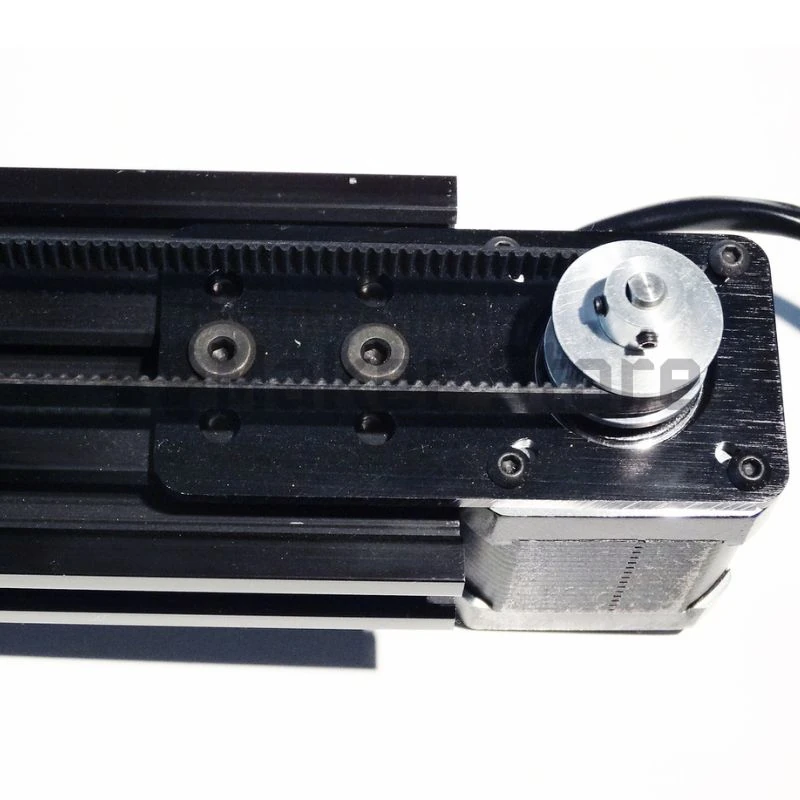
The belt and pulley transmission system is a cost-effective and high-speed transmission system used in linear actuators that converts rotational motion into linear motion. When the motor shaft rotates the driving pulley, the belt’s movement causes the driven pulley to rotate, resulting in linear motion of the Gantry Plate which is connected to the belt.
Ball Screw and Nut
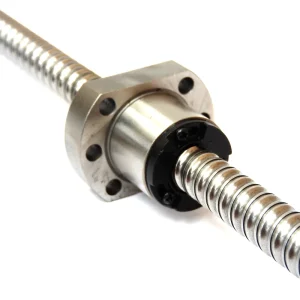
The core component of the ball screw-based transmission system is the ball screw, which is a threaded rod with a helical groove on its surface.
The ball screw is matched with a ball nut that contains recirculating ball bearings. As the ball screw rotates with the help of a motor, the ball bearings move along the helical groove, causing the nut to move linearly along the screw’s axis, which in turn results in linear motion of the Gantry Plate connected to the nut.
One of the key benefits of this transmission system is its efficiency. The rolling contact between the ball bearings and the screw reduces friction, resulting in smooth and energy-efficient motion.
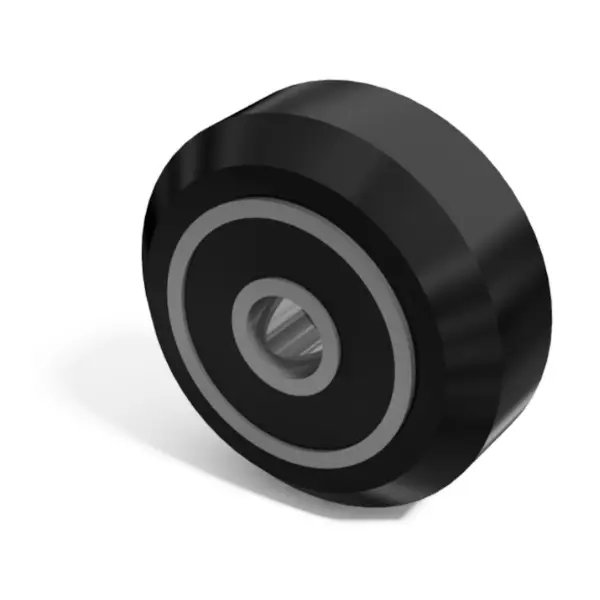 V Wheels are specialised wheels commonly used in various Linear Actuators these wheels have a V-shaped groove running along their circumference, allowing them to ride smoothly on our V-Slot Linear Rail.
V Wheels are primarily designed for linear motion systems, providing a low-friction and stable means of guiding and supporting moving components.
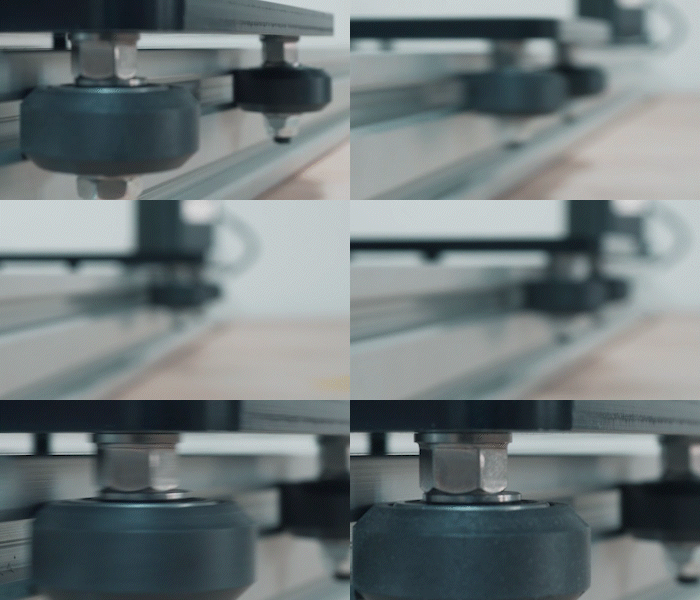
At Maker Store, we have different kinds of V Wheels to suit different requirements.
Some of these V Wheels are Dual V Wheel, Mini V Wheel, Solid V Wheel, Xtreme Dual V Wheel.
Concentric Spacers
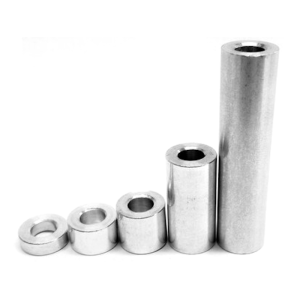
Concentric spacers are typically cylindrical in shape, with a central hole and uniform outer diameter. They are available in various lengths and thicknesses to accommodate different spacing requirements. They are used in linear actuators to space out the V Wheels and Gantry Plate.
Eccentric Spacers
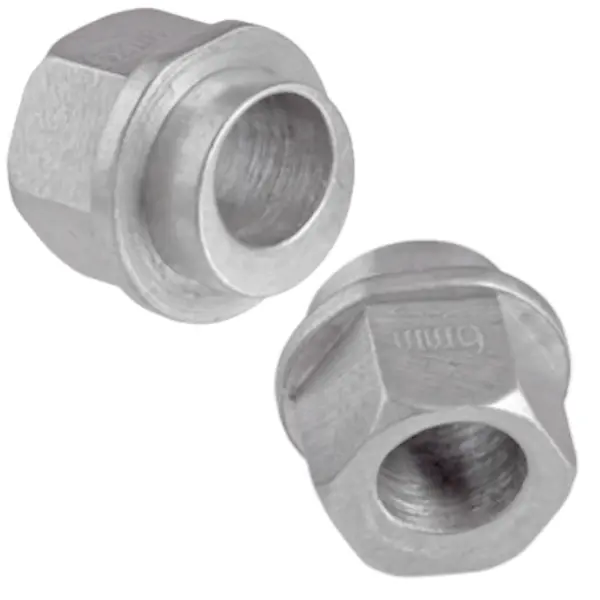
Unlike concentric spacers, which have a uniform centre hole, eccentric spacers have an off-centre hole or bore. This eccentricity allows for fine-tuning and alignment adjustments by rotating the spacer around its axis. They are used in Linear Actuators to adjust grip of V Wheels onto the V-shaped grooves of V-Slot Linear Rails. An 8mm spanner can be used to tighten or loosen the Eccentric Spacers to make relevant adjustments. 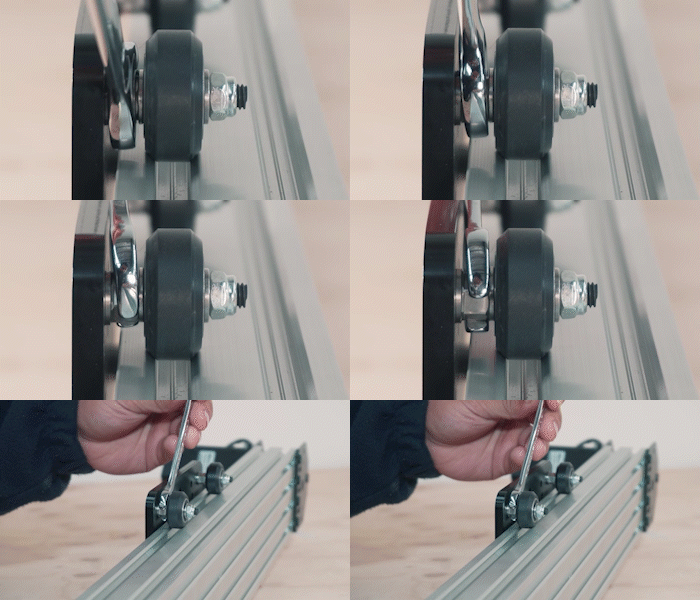
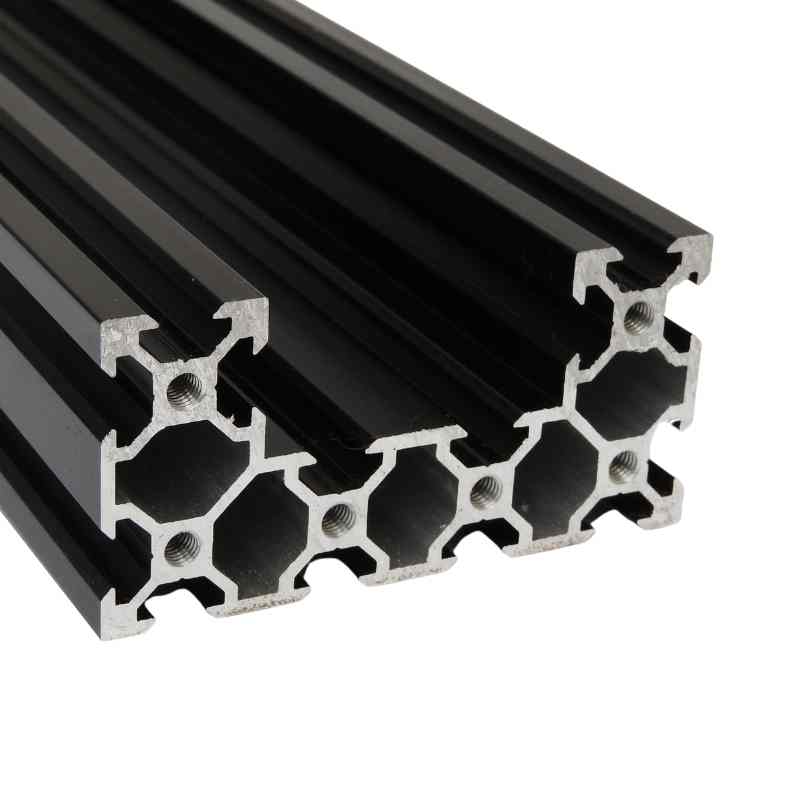
The 20 Series V-Slot Linear Rail serves as the foundational component for Linear Actuators and all other associated hardware is attached to it. It is an advanced aluminium extrusion designed to provide precise linear motion for a wide range of applications.
Constructed from high-quality aluminium alloy (6063 – T5), this rail offers exceptional strength and durability, ensuring reliable performance even under heavy loads. The V-Slot Linear Rail gets its name from the distinctive V-shaped groove running along its length. This V-groove acts as a guide for compatible wheels or bearings, enabling smooth movement along the rail’s axis. V-Slot Linear Rails are designed with a modular concept, meaning they can be easily joined together to create longer assemblies.
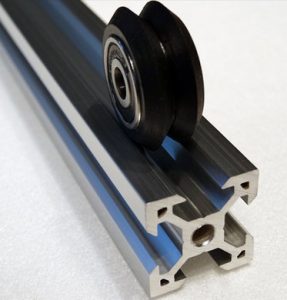
This modularity allows for scalability and adaptability, making it easy to customise the rail length to suit specific project requirements. V-Slot Linear Rails find applications in various fields, including 3D printing, CNC machines, robotics, camera sliders, and other motion control systems. Their versatility and adaptability make them a popular choice for many projects.
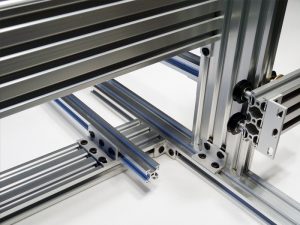
At Maker Store, we offer a wide selection of V-Slot Linear Rails featuring various profiles, lengths, and finishes to cater to your specific needs. These linear rails or extrusions form the main structural components of linear actuators. They act as the base over which all other components such as Gantry Plates, V-Wheels, End Plates, etc are mounted.
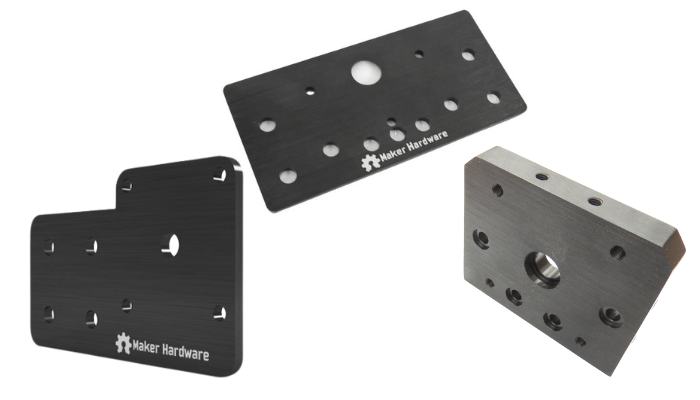
End Plates are the components used in actuator systems to enclose and protect the internal mechanisms and components of the actuator.
These plates have holes that allow the motor and lead screw to be mounted onto the V-Slot Linear Rail. They are typically attached at the ends of V-Slot Linear Rails and assist in aligning the Lead Screw or pulley.
Conclusion
Linear actuators offer numerous advantages, including precise positioning, compact design, low maintenance requirements, and easy integration into existing systems. They provide efficient and reliable linear motion, enabling smooth and controlled movement of various components and mechanisms. Linear actuators are essential components of our CNC machines as they provide necessary motion and positioning control.
Maker Store’s vast array of linear actuators extends the horizons for inventors, creators, and hobbyists. Yet, this is just scratching the surface. If you’re using linear actuators in a unique way, or if you have queries stemming from this blog post, we encourage you to share your creations using the hashtag #makerstoreau.
If you want to share details of your linear actuator projects or need any assistance, please email us at
Australia: sales@makerstore.com.au
USA: team@makerstore.cc
Until next time, happy making!