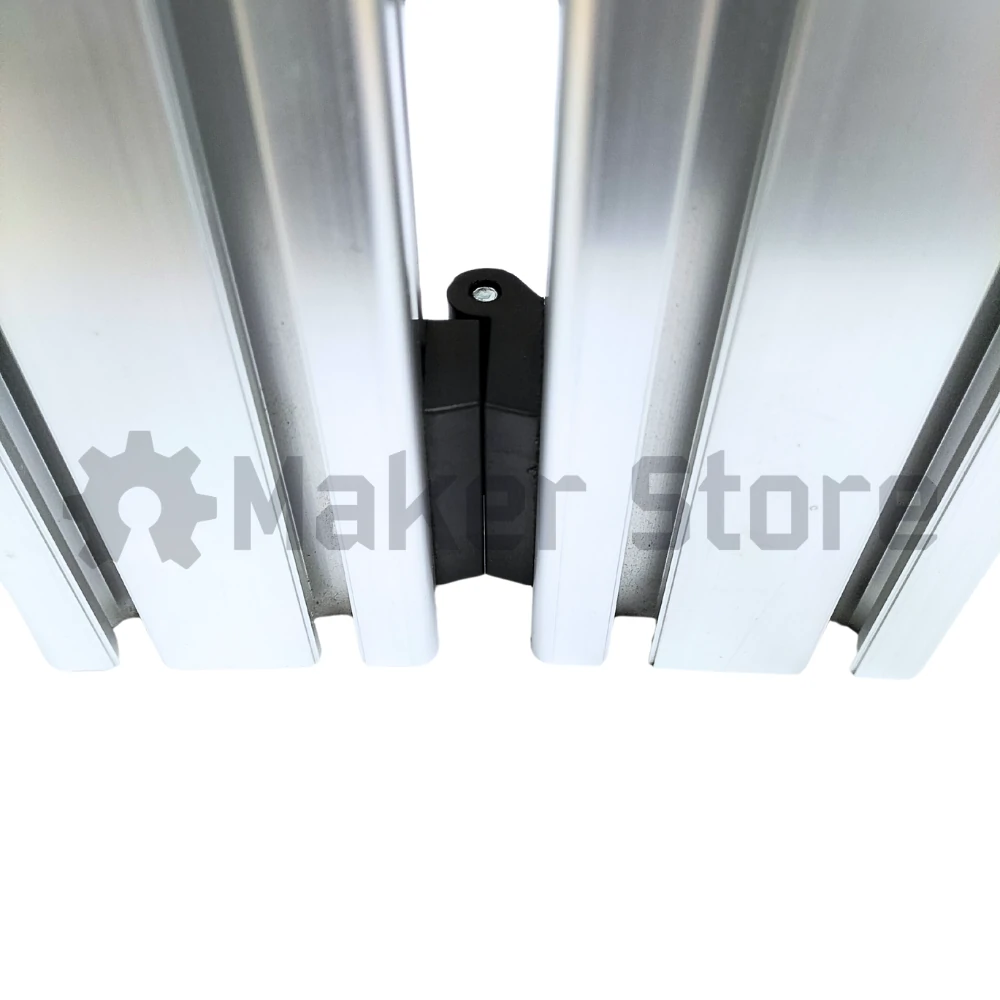

Description
Technical Overview
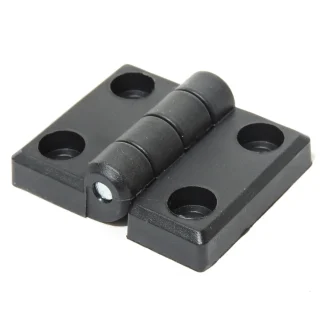
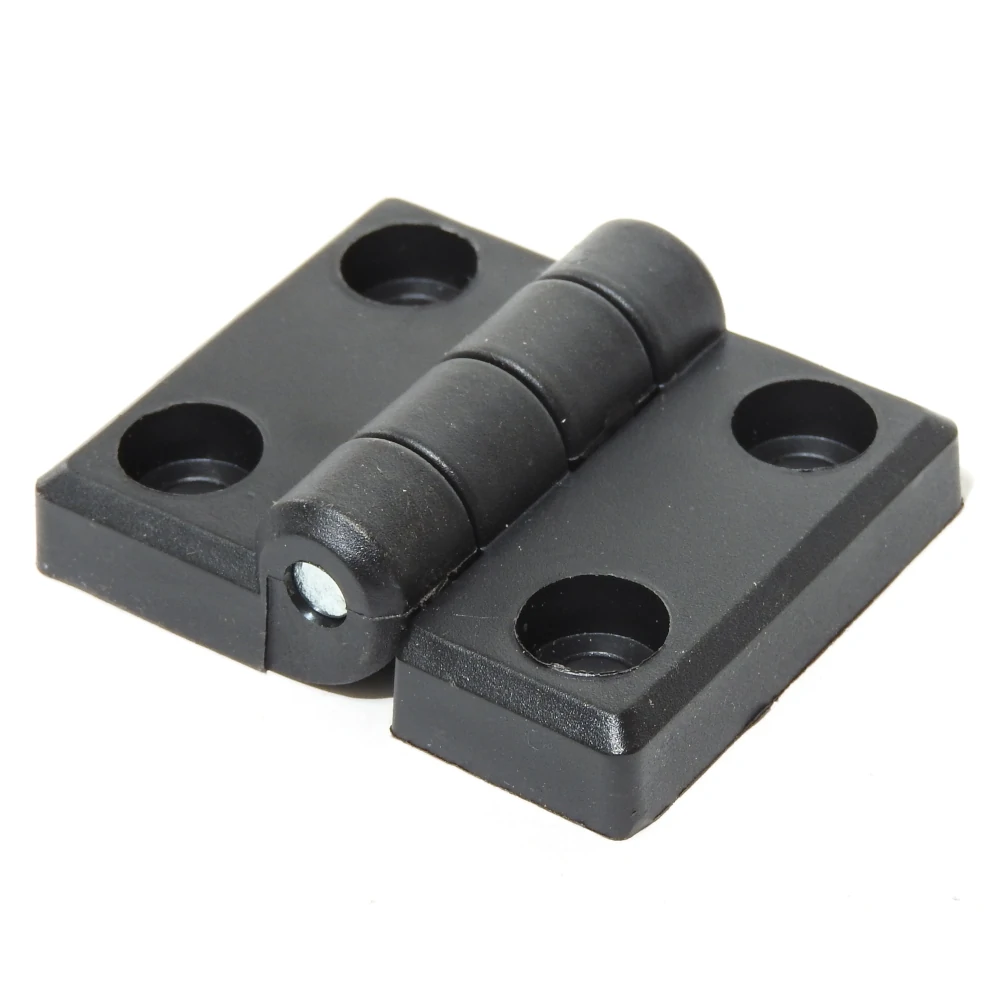
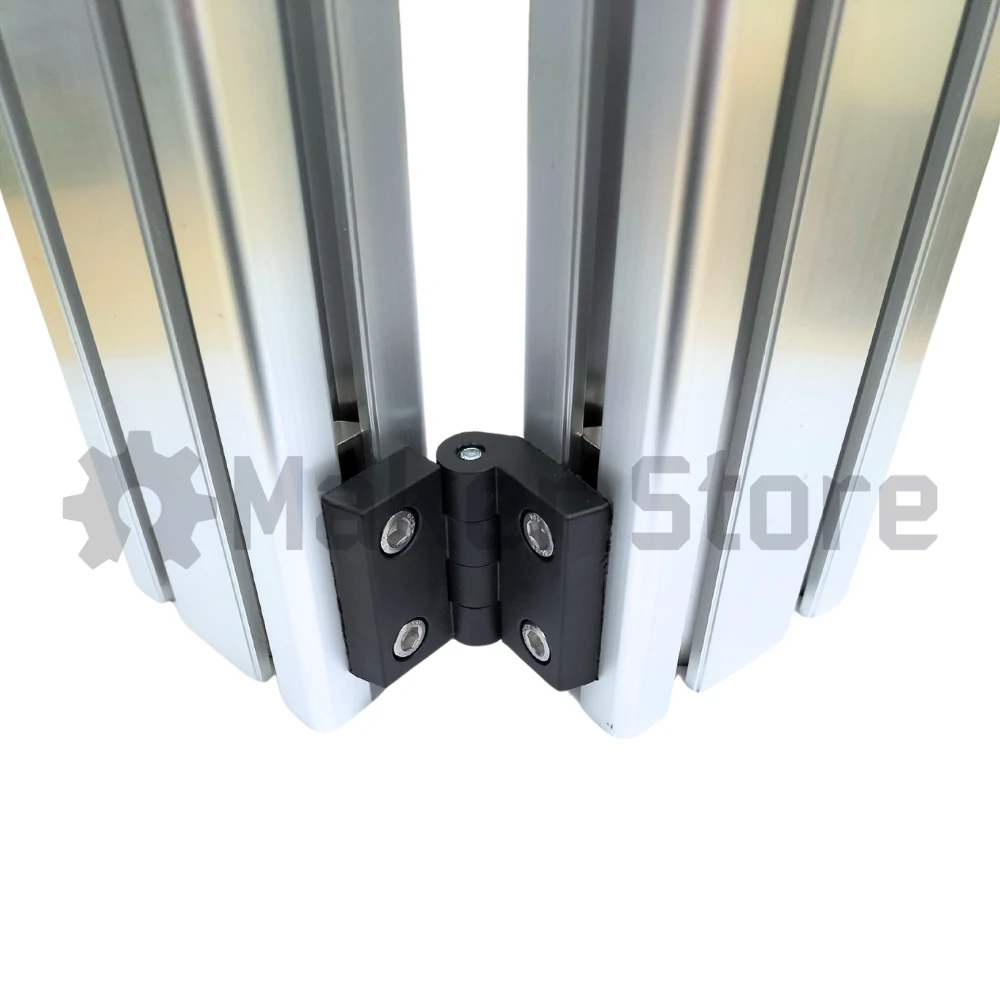
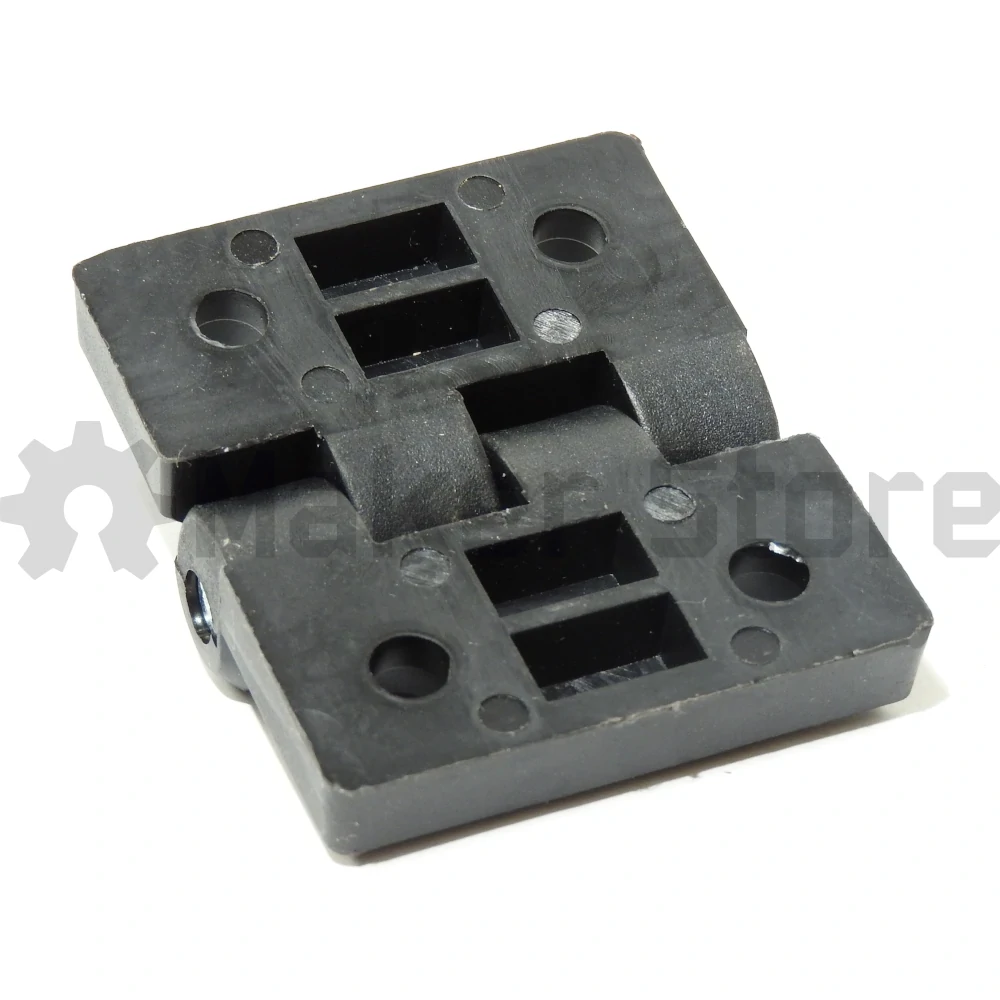
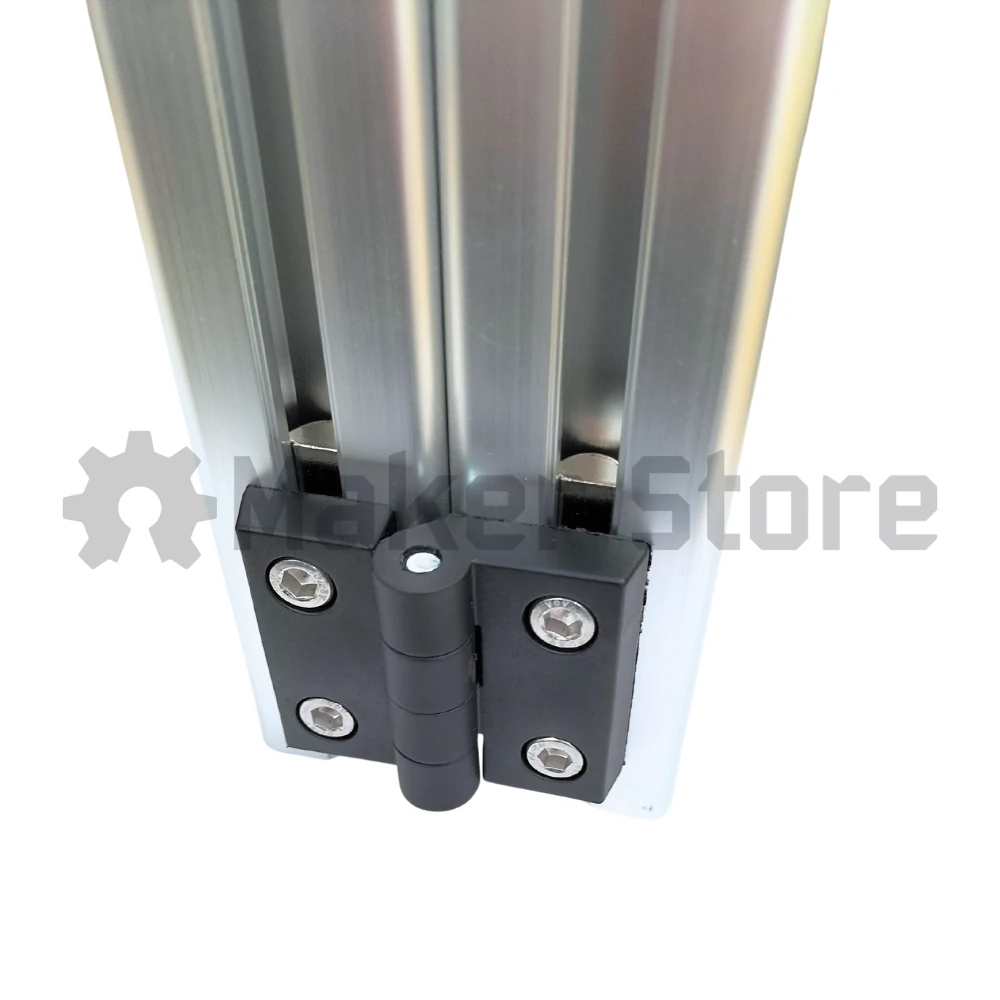
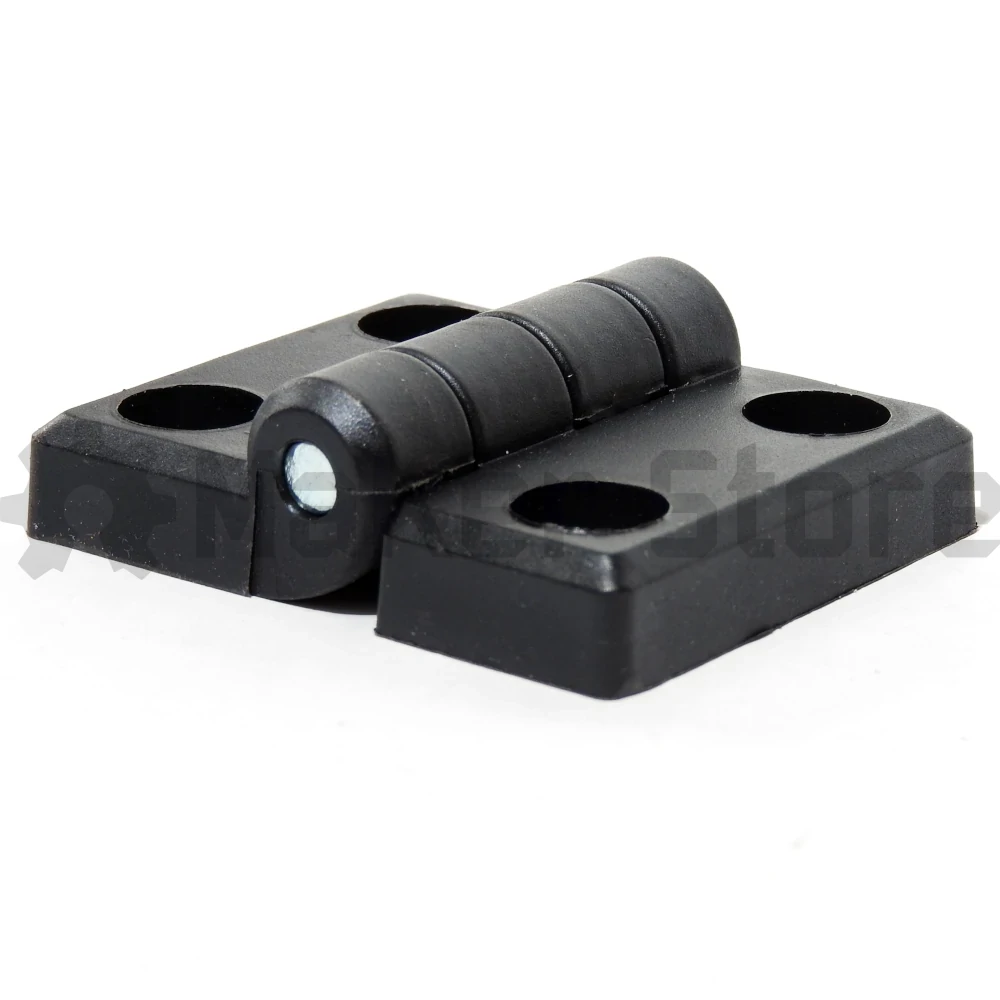
Manufacturers construct this connection component using a dual-leaf pivoting design. Specifically, they fabricate the leaves from fibreglass-reinforced black nylon and secure them with a stainless steel hinge pin. Consequently, this hardware element functions actively as a mobile joint interface. During operation, it provides a full 180-degree rotational movement between your connected structural sections. Furthermore, the physical layout incorporates a flat underside across both leaves. This flat surface ensures direct, flush mounting against mating extrusion faces. At the same time, this close contact prevents profile misalignment during installation. In addition, a symmetric four-hole mounting configuration splits evenly across both pivot leaves. Because of this strategic arrangement, the hardware successfully anchors intersecting profiles. Therefore, it manages multi-axis positional changes smoothly. Ultimately, the component integrates directly onto modular framing systems. It serves reliably as an adjustable external tie-plate across moving profile sections. Thus, this configuration permits controlled angular transitions while it simultaneously constrains side-to-side axial play during mechanical movement.
Applications
Engineers specify this pivoting component primarily for structural framework construction utilizing 40 Series T-Slot linear profiles. To build these systems, technicians apply the hardware to secure moving access points and adjustable panel assemblies. Moreover, they use it to construct positional enclosures across modular machinery frames. For instance, typical mechanical use cases include equipment access doors and protective safety guarding hatches. It also supports variable-angle fixture mounts within industrial automation layouts. For this reason, the assembly mounts directly to profile outer tracks. This precise positioning permits repeated opening and closing cycles without degrading your joint alignment over time. Additionally, the spatial arrangement of the four mounting holes allows standard fastening hardware to anchor the leaves cleanly. As a result, it locks the components firmly into parallel or perpendicular profile tracks. Finally, builders commonly utilize this capability in custom workbench shielding and material handling kiosks. It also enhances robotic cell perimeter enclosures by maintaining structural consistency under continuous mechanical strain.
Technical Specifications
Drawings
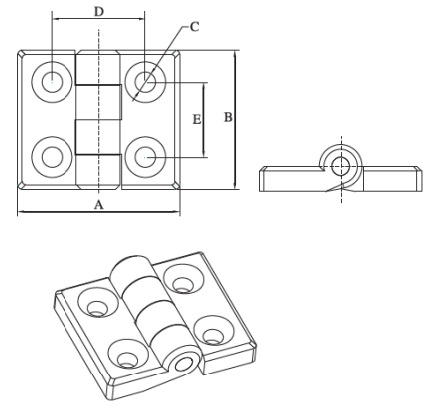
| A | B | C | D | E | kg |
| 60mm | 50mm | 6.5mm | 40mm | 30mm | 0.039 |
Maker Store Tips and Tricks
-
Verify the gap width between profile sections during mounting to ensure the leaf hinges clear adjacent hardware throughout the full 180-degree rotation.
-
Use flat-head or low-profile mounting screws to prevent hardware heads from obstructing leaf closure or binding the moving frame.
-
Ensure the linear axes of adjacent extrusions are aligned parallel prior to final fastener torque to avoid binding the stainless steel internal pin.
What makes T-Slots such an easy assembly task?
Constructing frames from T-Slot extrusions is straightforward as they eliminate the need for specialized tools or welding, thereby simplifying the assembly process. To build frames using T-Slot Linear Rail, you will require:
- 40 Series T-Slot Extrusions: These form the main structural components, usually crafted from aluminium, with slots along their lengths for easy connection of various parts and accessories. Additionally, their robustness ensures they hold up well over time.
- 40 Series Brackets and Connectors: These specialized components fit snugly into the T-Slot extrusions, securing them together at various angles. The range includes corner brackets, T-nuts, L-shaped brackets, and other connectors. Besides, they are easy to install and adjust as needed.
- Fasteners: Utilize Bolts, screws, and nuts to securely attach the brackets and connectors to the T-Slot extrusions. Furthermore, their variety allows for flexible assembly solutions.
- Tools: Basic hand tools such as wrenches, Allen keys (hex keys), and screwdrivers are necessary for assembly. Additionally, a saw may be needed to cut the T-Slot extrusions to your desired lengths.
Unsure if this product is compatible with our aluminium extrusions?
Look for the Maker Store Compatibility Badges!