
Description
Technical Overview
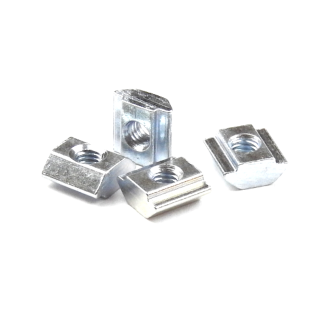
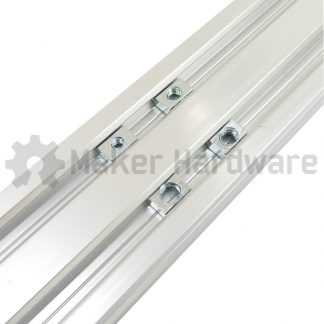
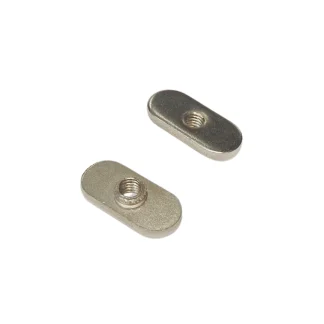
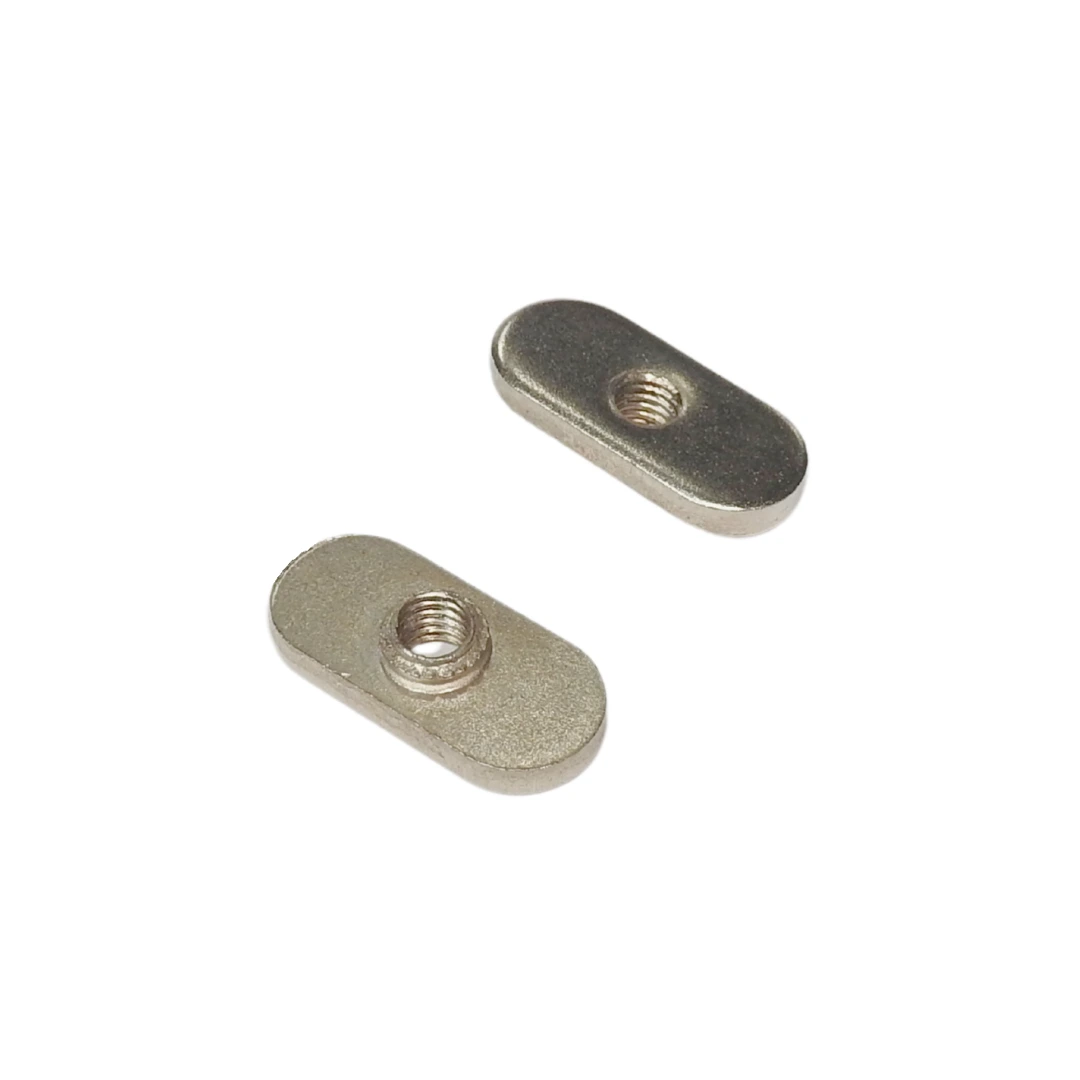
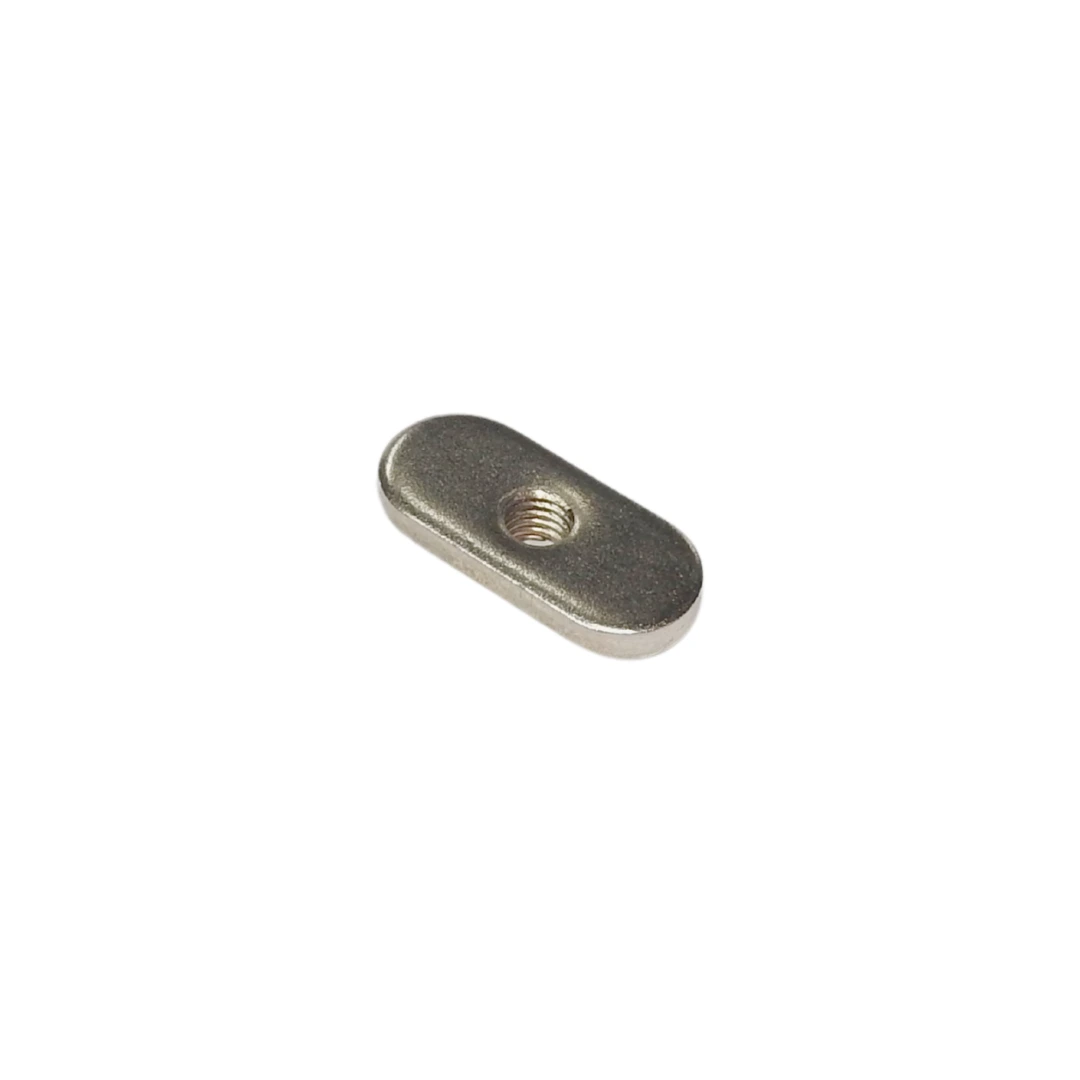
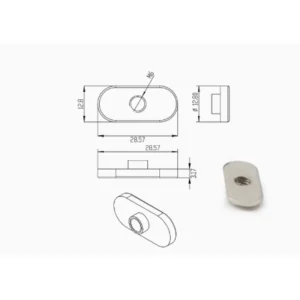
Manufacturers produce these Slide-In Economy T-Nuts to facilitate rigid joint connections within standard modular framing tracks. To establish high tensile strength, engineers fabricate the part from nickel-plated carbon steel. Consequently, this materials architecture prevents thread stripping and delivers dimensional stability under persistent directional loading. Furthermore, the nut geometry incorporates a specialized sliding assembly profile. This specific shape functions actively as an end-loading insertion interface within profile channels. As a direct result of this design, the hardware slides cleanly from the open face of a profile track to deliver flat, robust seating against internal shoulders.
Additionally, the base layout features a profile configured specifically to sit squarely into internal profile channels. For instance, the extra material thickness across the chassis body maximises the thread-to-screw engagement area. By doing so, it successfully distributes localized mechanical clamping stress over a wide contact zone to render tighter and more secure fastening. Moreover, the complete design accommodates multiple internal metric thread sizes including M4, M5, M6, and M8 options. Therefore, these varying thread lines anchor standard machine bolts firmly against internal profile shoulders. This direct integration securely locks adjacent cross-members into place to establish permanent or temporary fastening configurations.
Applications
Designers specify this modular fastening component primarily for structural framework tracking utilizing standard 40 Series T-Slot linear profile systems. To build these precise robotic and automated setups, technicians apply the hardware to anchor linear rails, actuator brackets, and structural tie-plates. Specifically, they install the nuts into precision CNC machines, industrial 3D printers, and automated robotic arms to maintain tracking alignment under mechanical load. Furthermore, the assembly provides highly predictable mechanical load distribution across high-vibration equipment frames. It also secures heavy testing instrumentation towers and sensitive measuring equipment enclosures that undergo frequent mechanical adjustment.
Simultaneously, the completed hardware tracking layout slides evenly along profile channels to enable uniform weight distribution across multi-axis joint configurations. Because the component inserts directly through the open ends of the profile tracks, users can adjust or reposition structural mounting points linearly along the channel path. Therefore, this spatial flexibility allows you to adapt the machinery framework to suit changing geometric configurations over time. Ultimately, this functional versatility makes the part highly suitable for securing custom tool gantry plates, modular workspace fixtures, and material handling enclosures. It also reinforces high-vibration dynamic frames that are regularly subjected to cyclic industrial stresses.
Technical Specifications
Drawings
Maker Store Tips and Tricks
-
Slide the component directly into the open end of the extrusion track before finalizing your sub-assembly cross-member attachments.
-
Use a relevantly sized metric machine screw (M4, M5, M6, or M8) to apply clamping pressure and square the nut face firmly against internal track shoulders.
-
Periodically inspect fastener tightness in high-vibration applications such as CNC routers or automation assemblies to protect against minor layout shifting over long operation cycles
Unsure if this product is compatible with our aluminium extrusions?
Look for the Maker Store Compatibility Badges!