Description
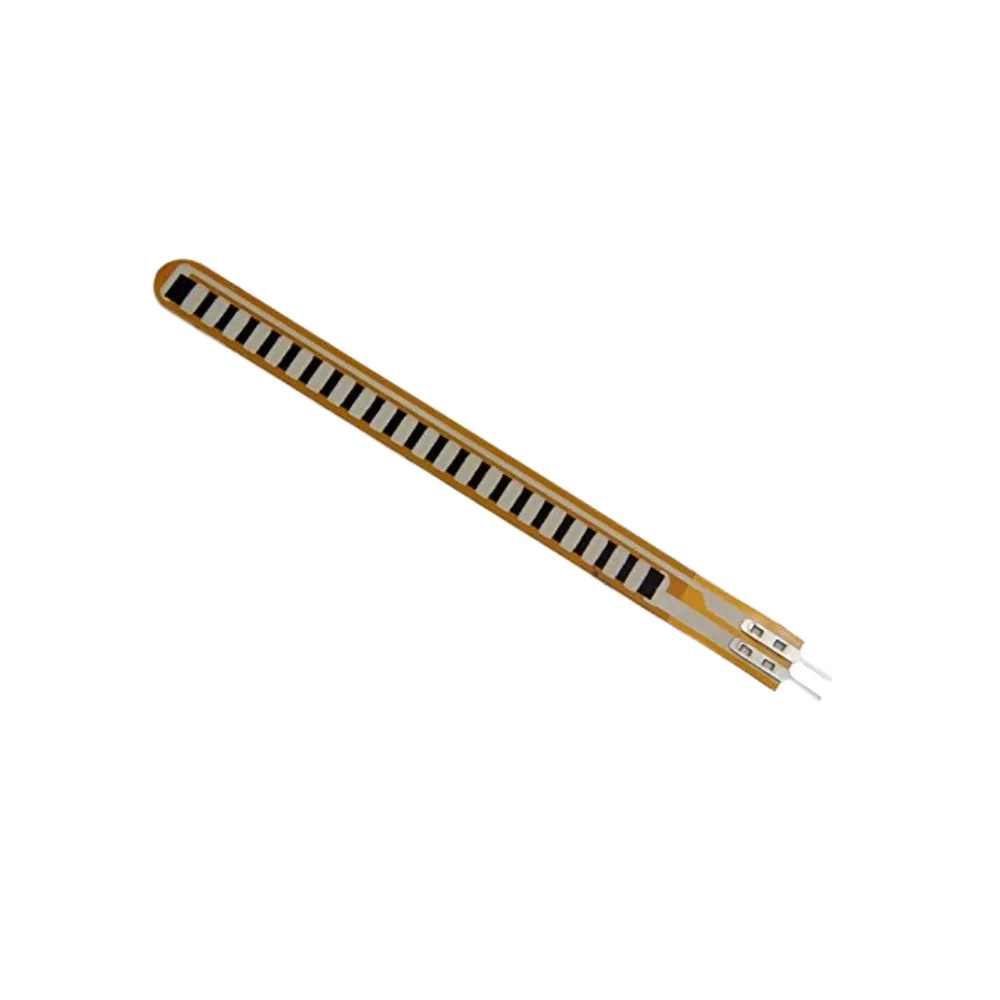
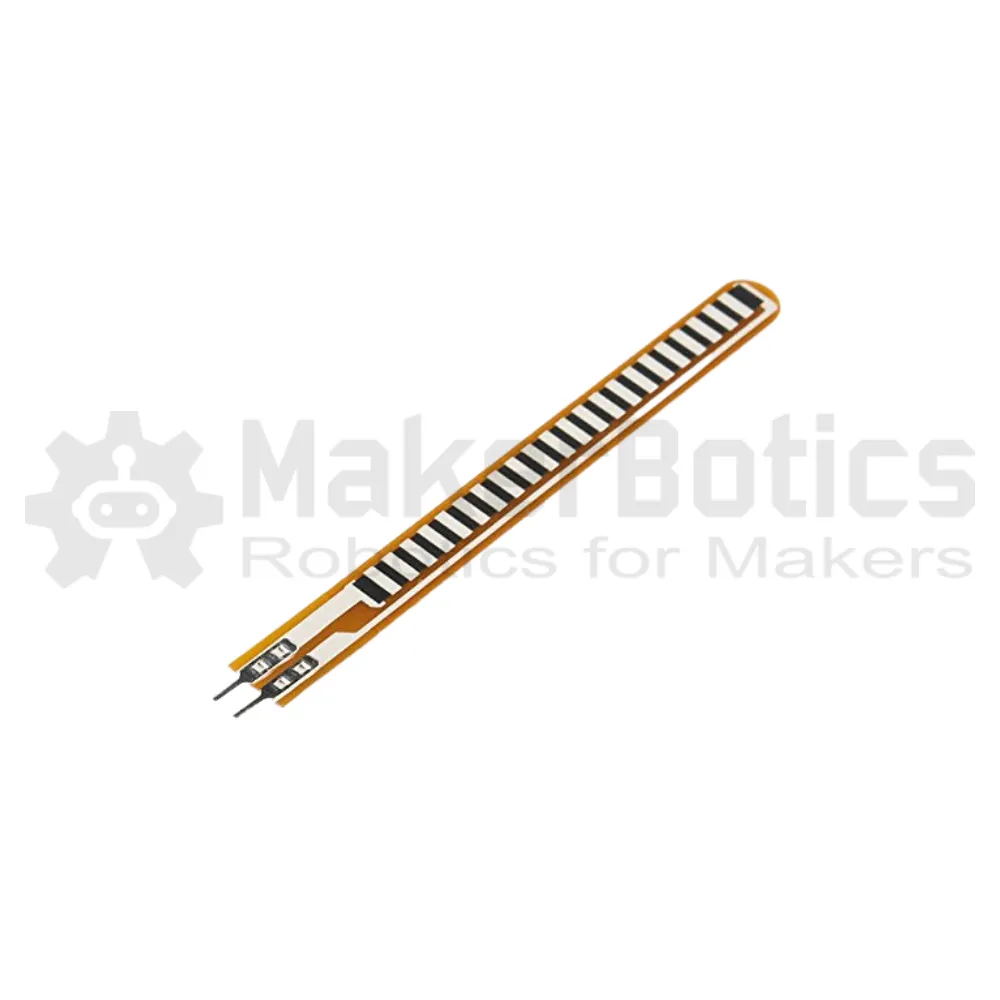
Upgrade your projects with reliable, easy-to-use flex sensors—available in both 2.2-inch and 4-inch lengths. These sensors are ideal for robotics, wearable tech, gaming controllers, medical devices, and more, providing precise measurements of bending, flexing, or angular displacement.
Available Variations:
- 2.2-inch Flex Sensor
- 4-inch Flex Sensor
How Flex Sensors Work:
Flex sensors are thin, flexible strips that operate as variable resistors. Their resistance increases as they are bent. The sensor consists of a substrate coated with conductive ink and a segmented conductor. When the sensor is flexed, the conductive layer stretches, reducing its cross-section and increasing resistance. This change can be measured using a simple voltage divider circuit and read by any microcontroller or analog input:
- Straight (Unflexed): Low resistance
- Bent: Higher resistance proportional to the bend angle
Typical Usage:
- Attach to gloves for gesture recognition
- Integrate into robotics for joint angle measurement
- Use in physical therapy devices for monitoring movement
These flex sensors can be used with the Maker Store ESP32 Screw Terminal Shield, Arduino microcontrollers or Teensy microcontrollers. They work with controllers using either 5V or 3.3V logic levels without the need for a logic level converter.
Flex Sensor 2.2 Inch – 4 Inch Key Features:
- Simple variable resistor operation: Resistance increases with bend angle.
- Breadboard-friendly: 0.1″ pin spacing for easy prototyping.
- Lightweight and flexible: Integrates easily into wearables and robotics.
Applications
- Robotics (joint and limb angle detection)
- Wearable technology (gesture gloves, motion tracking)
- Gaming controllers (e.g., data gloves)
- Medical devices (rehabilitation, physical therapy)
Usage Notes
- Bend direction: Always bend with the metal pads on the outside (text on inside of bend) for accurate readings and sensor longevity.
- Mounting: Secure the base; only the active area should flex to avoid damage.
- No polarity: Both pins are interchangeable; connect in either direction.
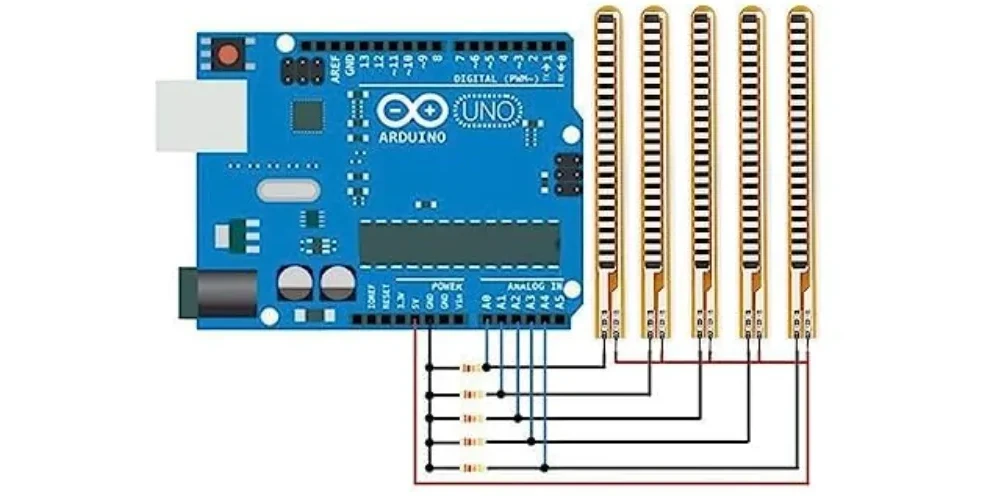
Connection diagram:
It is recommended to use a resistor to connect to the microcontroller. Different resistor values affect the flex sensor sensitivity. A good starting point is a 1K resistor.
Please Note:
It is recommended to use a resistor to connect to the microcontroller. Different resistor values affect the flex sensor sensitivity. A good starting point is a 1K resistor.