Description
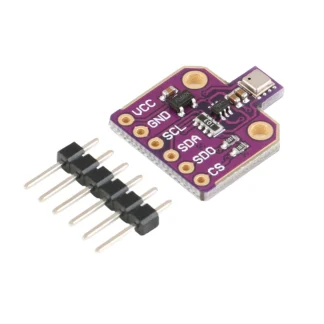
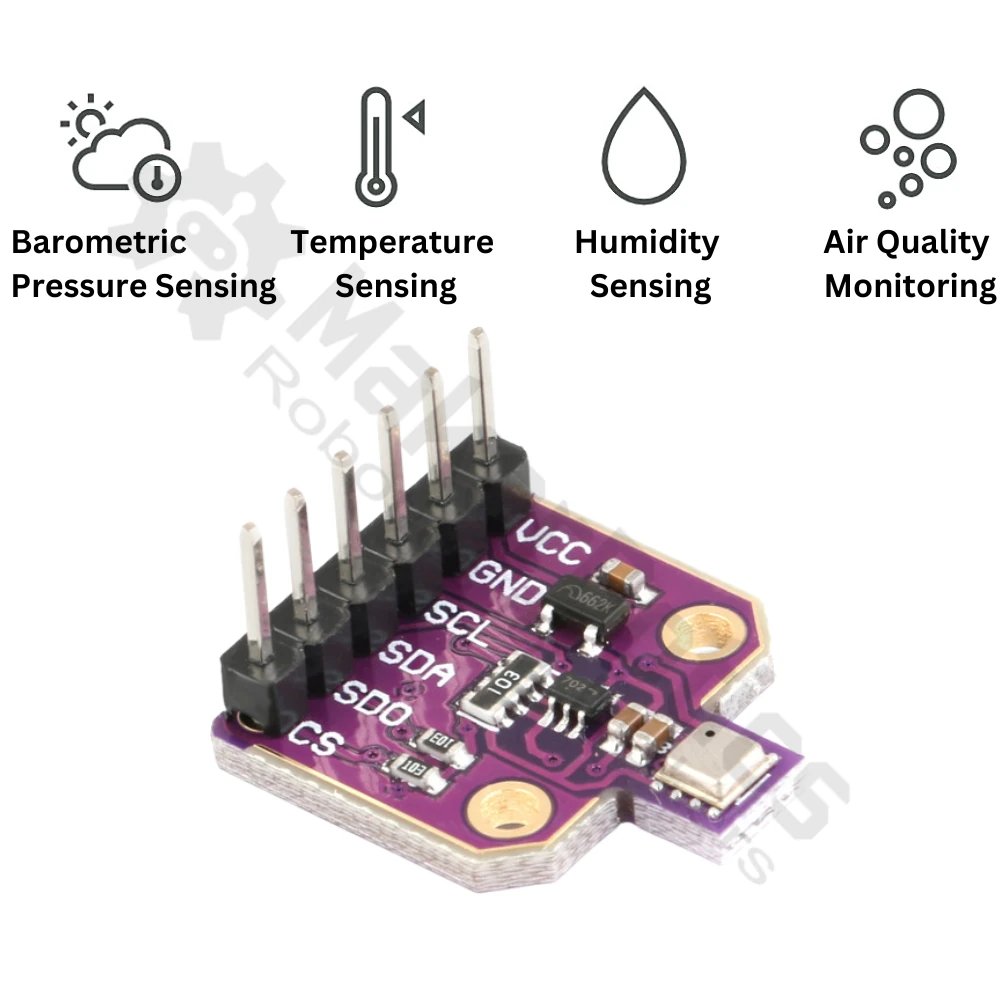
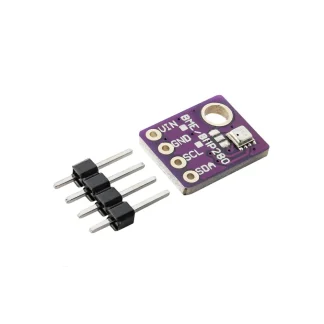
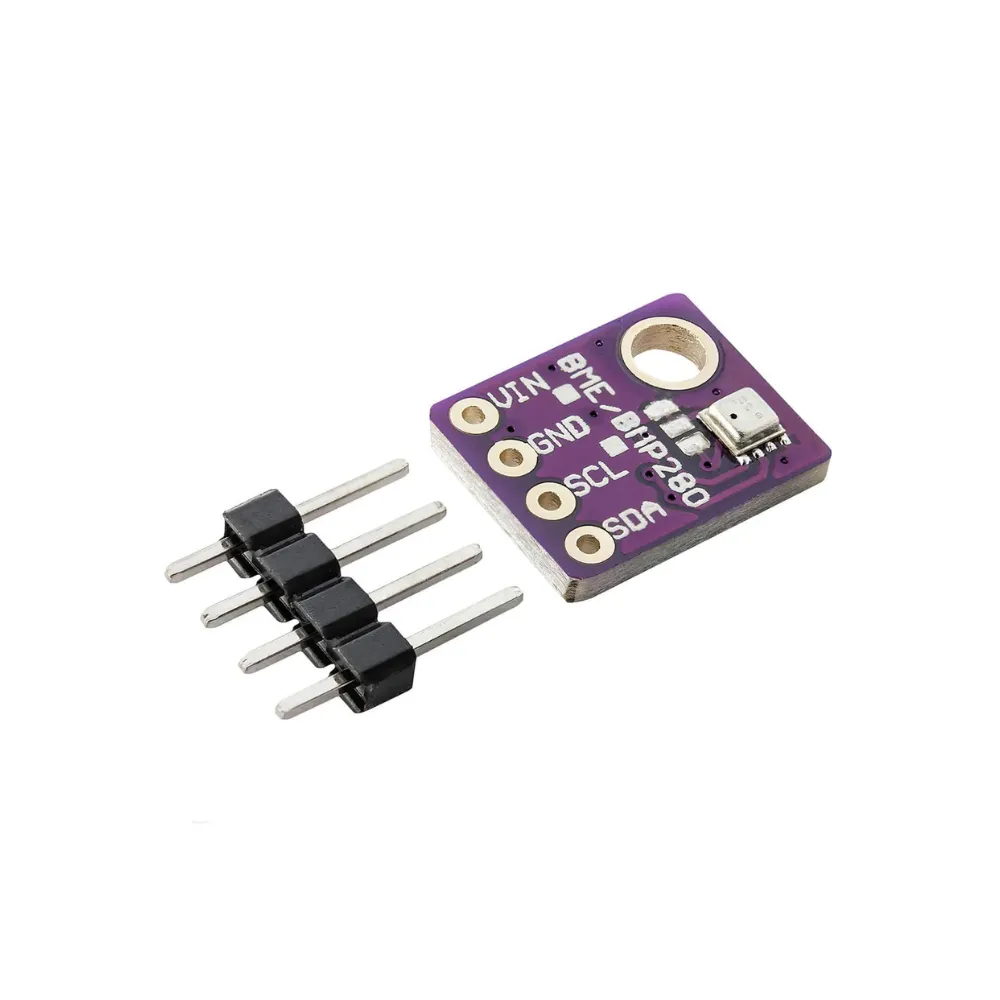
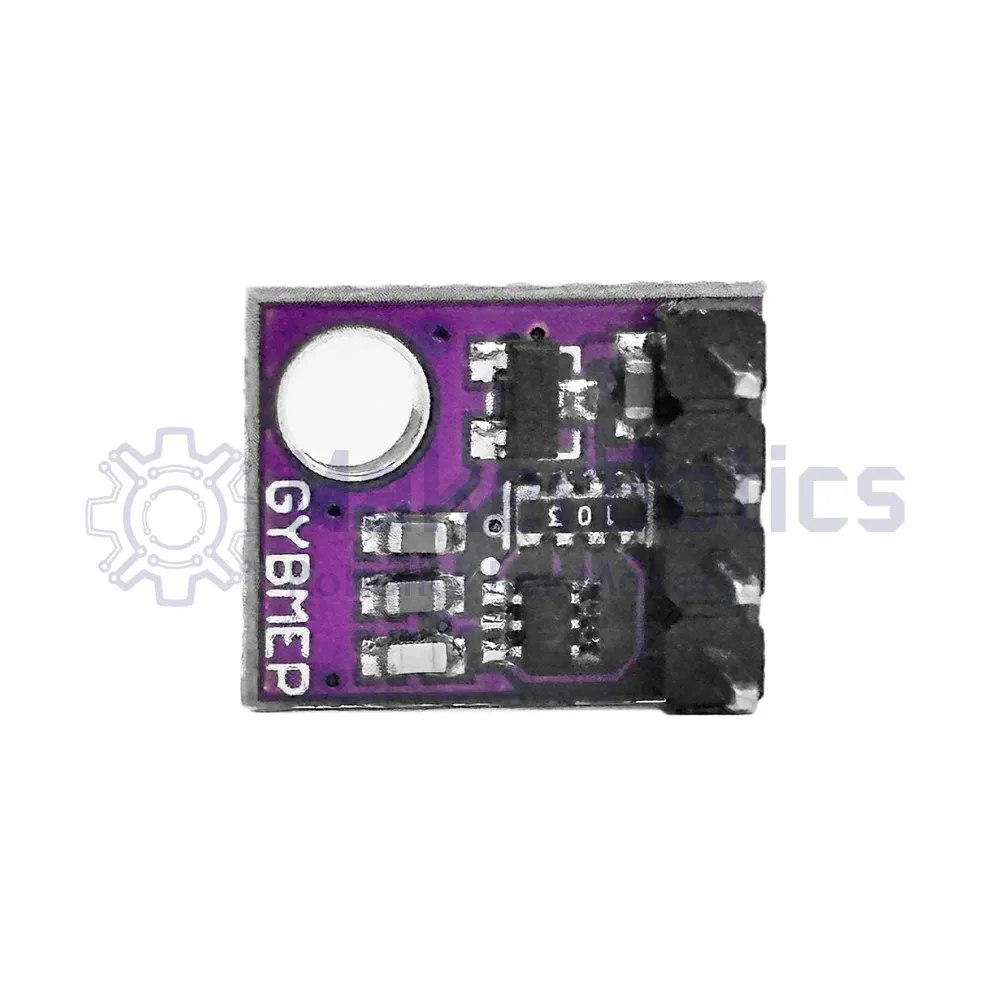
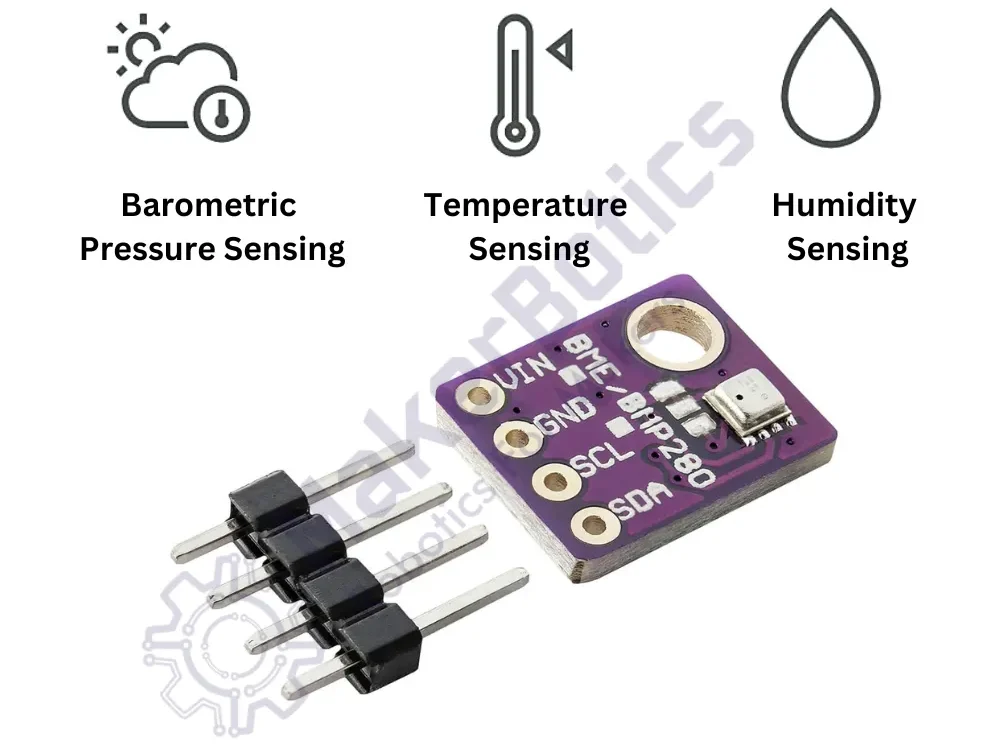
The BME280 Environmental Sensor, a compact, energy-efficient device, accurately measures temperature, humidity, and barometric pressure. Transitioning seamlessly between indoor and outdoor settings, it finds application in diverse scenarios, ensuring precise weather monitoring.
In addition, the BME280 sensor’s low-power design makes it perfect for integrating into battery-powered devices.
It communicates with the host system via an I2C interface and comes in a small, compact package, simplifying integration into various designs.
Employ this sensor in situations demanding precise and accurate measurements of temperature, humidity, and pressure.
BME280 Environmental Sensor Specification
- Temperature measurement range: -40°C to 85°C
- Temperature measurement accuracy: ±0.5°C
- Humidity measurement range: 0% to 100%
- Humidity measurement accuracy: ±3%
- Barometric pressure measurement range: 300 hPa to 1100 hPa
- Barometric pressure measurement accuracy: ±1 hPa
- Power supply voltage: 3.6V
- Average current consumption: 0.1 to 3.6 µA
- Communication interfaces: I2C
- Operating temperature range: -40°C to 85°C
- Package size: 2.5 mm x 2.5 mm x 0.93 mm
Features
Power and Communication
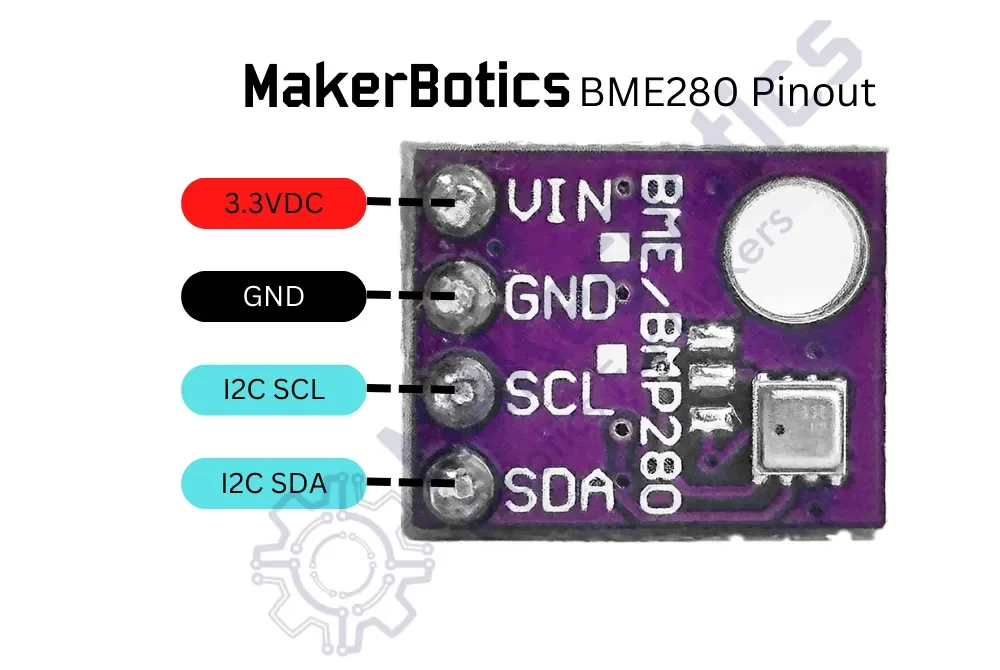
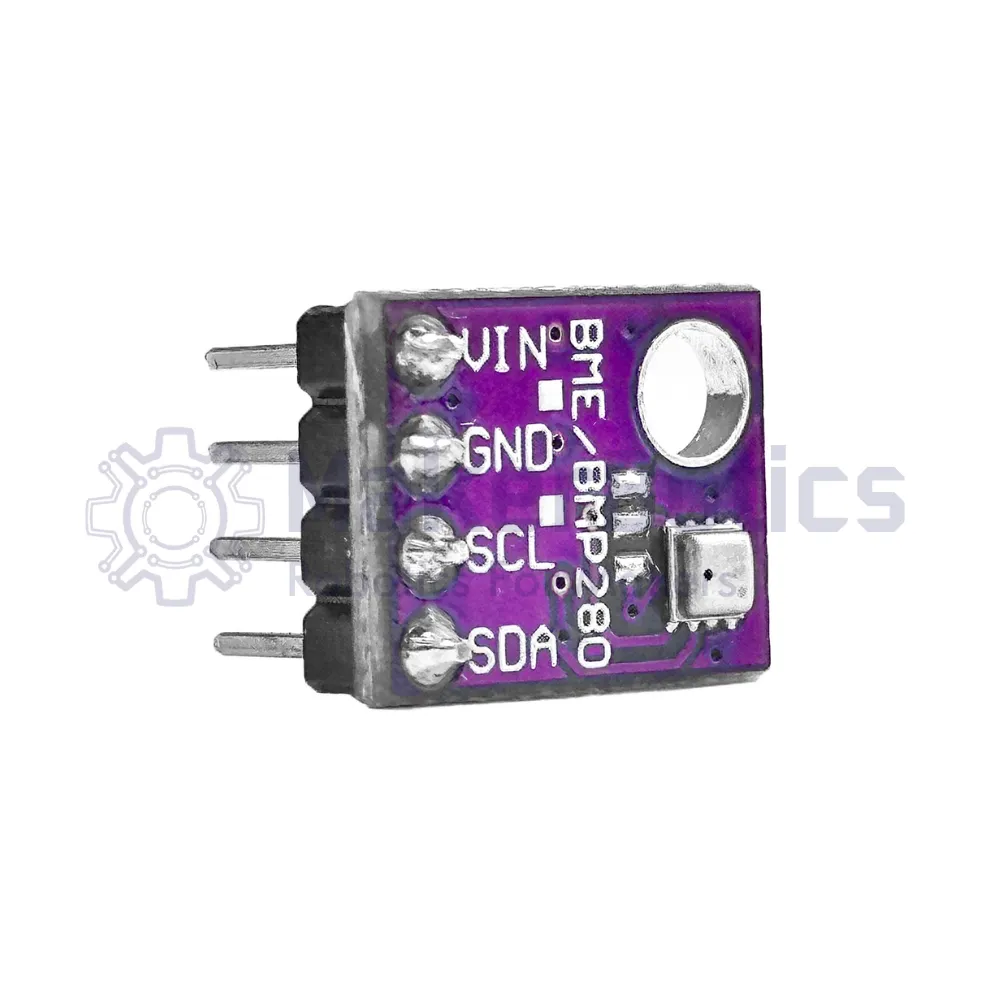
The BME280 Environmental Sensor is highly versatile and can be interfaced with either 3.3V or 5V compatible microcontrollers such as the ESP32, Teensy or Arduino microcontrollers. A logic-level shifter is required if using a microcontroller with a logic level of more than 3.3V. This sensor requires 3.3V at the power inputs. Operating the controller above this voltage may irreversibly damage it.
Communication occurs through either the I2C bus. I2C is most recommended for a simple, 2-wire configuration and is addressable, meaning that many other I2C compatible sensors can be connected to the same microcontroller I2C bus, increasing versatility. The default I2C address is 0x76. Pulling the SDO pin high allows for switching this to 0x77.
Uses:
- DIY weather station
- Altitude mapping