Description
Technical Overview
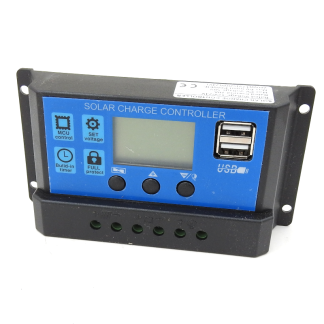
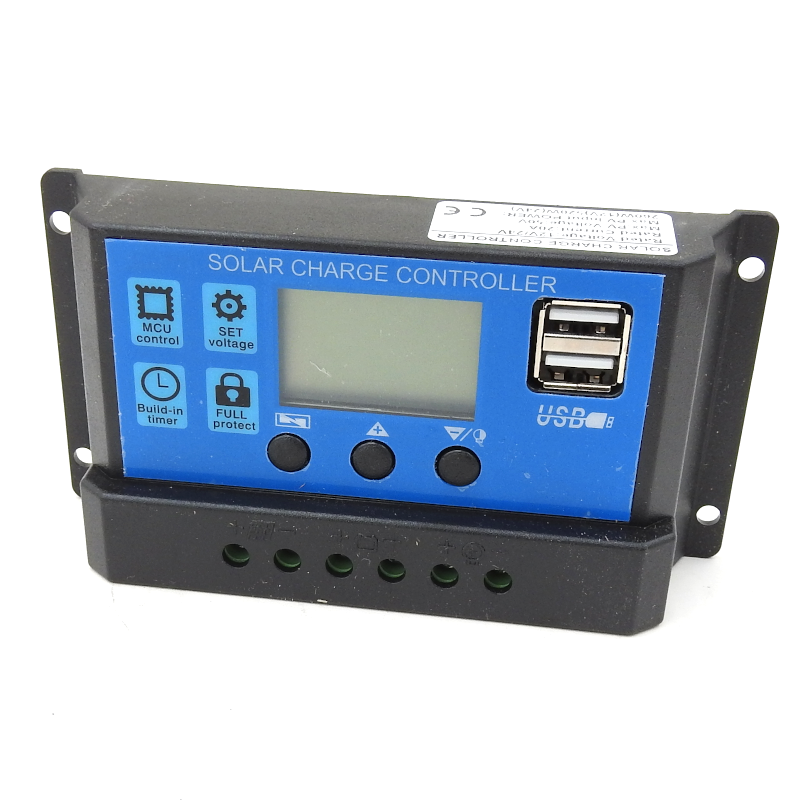
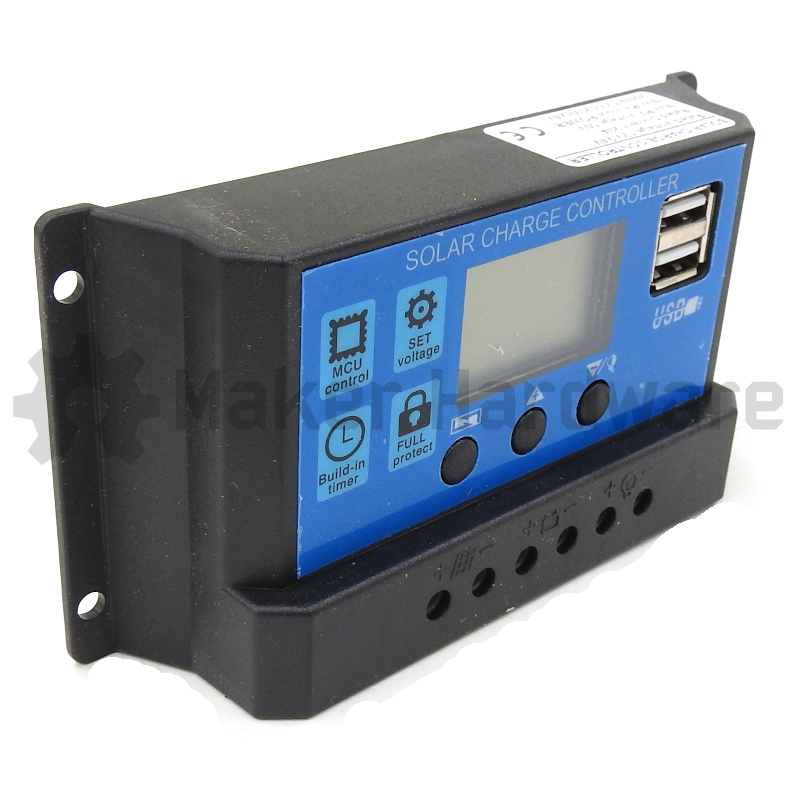
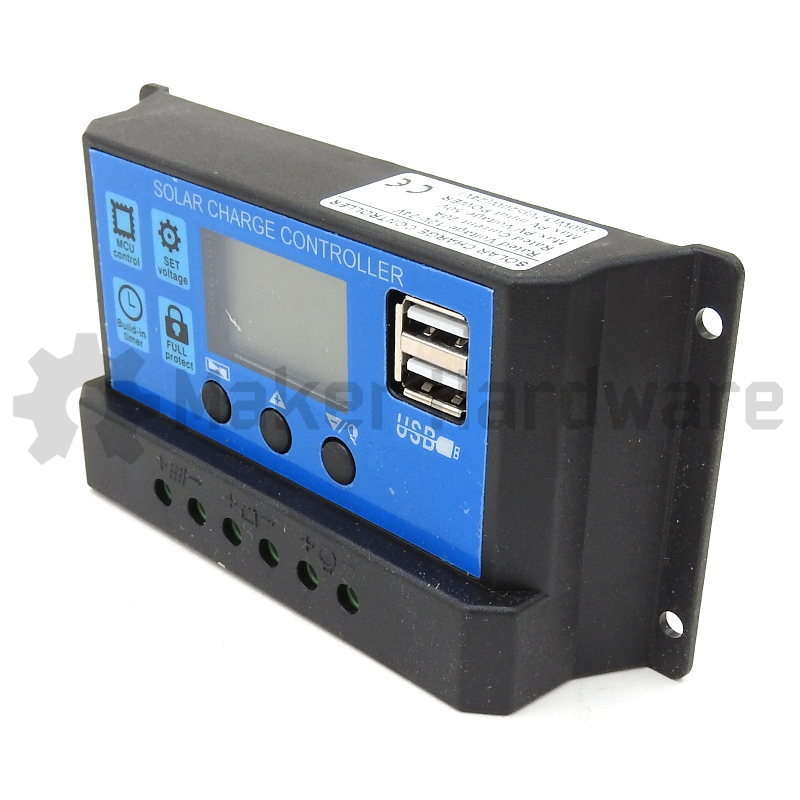
This component functions as a fully automatic pulse-width modulation (PWM) solar charge controller designed to manage power transfer from solar panels to a battery storage matrix. Primarily, the integrated microcontroller regulates charging profiles to prevent battery overcharging or hazardous over-depletion conditions. It automatically supports both 12V and 24V sealed lead-acid (SLA) and gel cell battery architectures. Furthermore, the unit acts as a system distribution hub by delivering up to 20A of current directly to connected load devices. It also integrates dual auxiliary USB power channels to supply a regulated 5V DC output at up to 2.5A for external peripherals.
Applications
Renewable energy technicians and automation engineers actively deploy this controller across remote power stations and off-grid electrical setups. For example, system builders frequently integrate the module into small-scale hobby solar configurations and remote telemetry enclosures to maintain reliable battery bank state-of-charge levels. Additionally, operators utilize the device in automated agricultural arrays, remote security systems, and localized backup power modules where low-voltage DC power handling is required. The integrated 4-stage PWM charge management scheme operates autonomously to optimize energy transfer. Meanwhile, the built-in circuit protection safeguards downstream equipment within temporary field installations or mobile cabins against short circuits, reverse polarity connections, and overloads.
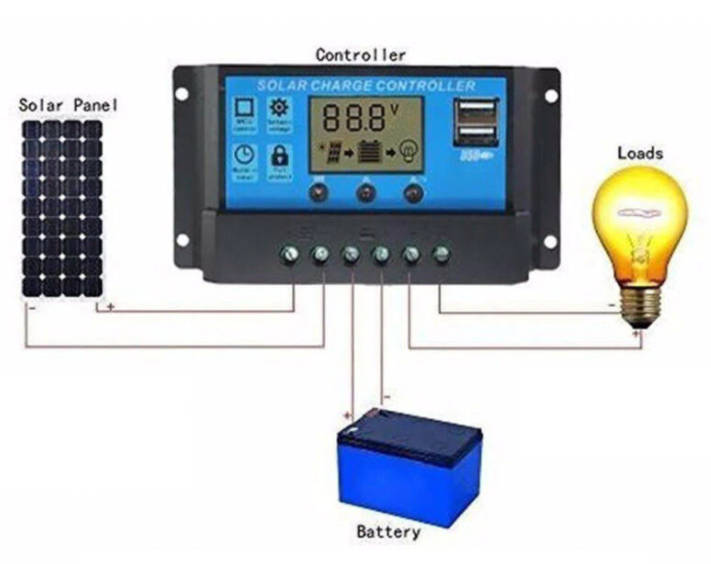
Wiring Diagram
Please see below for the typical use case for this charge controller.
Maker Store Tips and Tricks
-
Always reference and cross-verify the specific charge requirements and threshold limits of your chosen battery before configuring input power paths.
-
Restrict deployment of this solar controller exclusively to sealed lead-acid (SLA) and gel cell chemistries; do not use it with incompatible lithium or NiCad cells.
-
Please note that the physical housing color or superficial casing finishes may vary slightly between manufacturing batches.