Description
Technical Overview
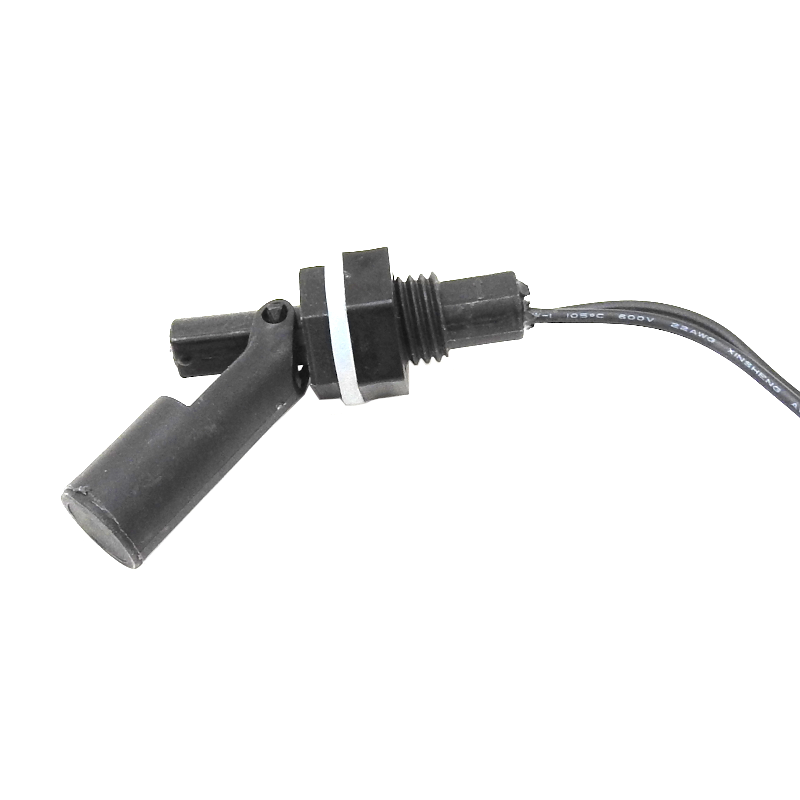
This float switch sensor actively monitors water levels within reservoirs and various liquid bodies. Because it detects physical changes in fluid height, the device operates dynamically as a liquid level sensor. Consequently, the unit serves as a highly reliable component for automated level monitoring systems. Furthermore, this versatile sensor integrates seamlessly into broader electronic control systems since it maintains direct compatibility with a wide range of microcontrollers. Therefore, it offers an ideal, practical solution for both hobbyist projects and professional-level fluid management applications alike.
Applications
Engineers engineeringly deploy this float switch sensor for real-time liquid level monitoring and automated fluid control systems. However, users can implement the device in two distinct mechanical configurations depending entirely on specific application requirements. For instance, when you install the sensor with the lever pointing upwards, the system actively optimizes its orientation to detect a rising fluid level and prevent overflow. Alternatively, when you install the device with the lever pointing downwards, the mechanism shifts its focus to detect a rapid reduction or drop in fluid level to prevent dry running. As a result, operators commonly utilize this component in water tanks, reservoirs, sump pumps, and fluid storage systems that require precise high-level or low-level detection.
Technical Specifications
Typical Use Case
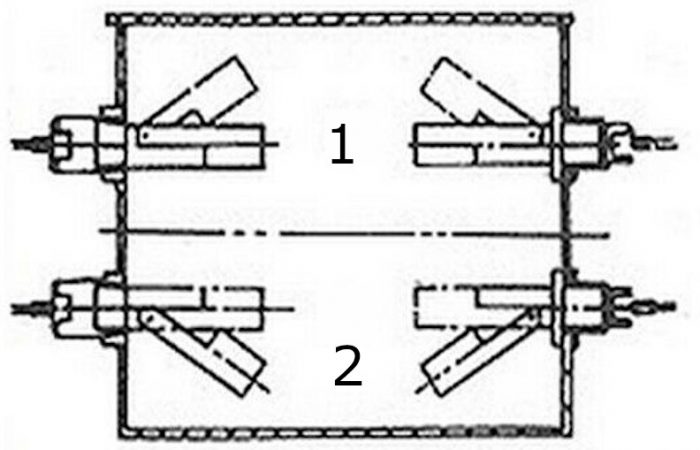
As shown below, you can use the sensor in two ways:
-
Configuration 1: The sensor detects a rise in fluid when you point the lever up.
-
Configuration 2: The sensor detects a reduction in fluid when you point the lever downward.
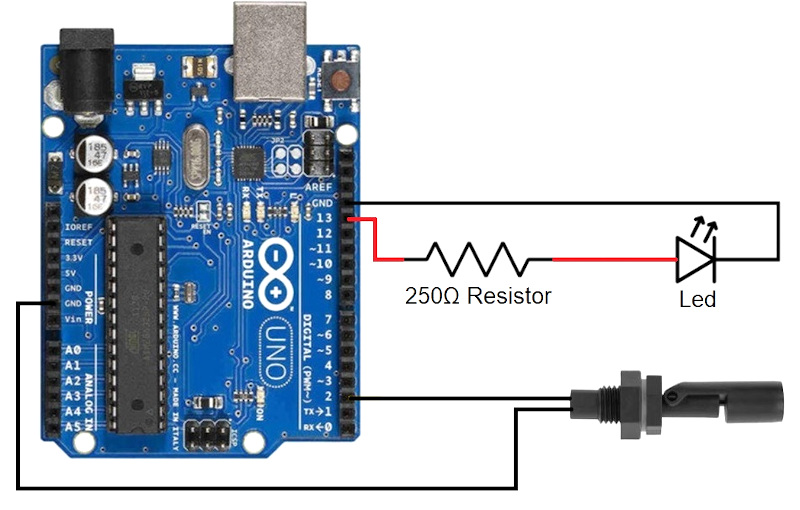
Typical use case with a micro controller:
In the representation below, the switch is used to activate the Led when the fluid levels rise and trip the leaver (Configuration 1). This can also be easily reversed to show that fluid levels are low by reversing the orientation of the sensor (Configuration 2).
Maker Store Tips and Tricks
-
Ensure the mounting orientation (vertical or horizontal) aligns with your physical tank geometry before final installation.
-
Verify that the lever orientation matches your intended logic profile (pointing up to detect rising fluid, or down to detect falling fluid).
-
Do not exceed the maximum contact rating of 10W or the switching current of 0.5A to prevent damaging the internal switch mechanism.