FASTENERS
The T-nut is a general term used to describe many different types of fasteners for V-Slot profile. Below are some of the main types and how to use them with V-Slot.
Slide-In T-Nuts
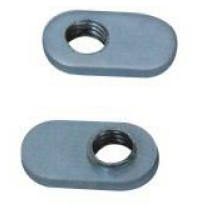
Slide-in T-nuts must be loaded from the end of the V-slot. It is necessary to pre-load during assembly.
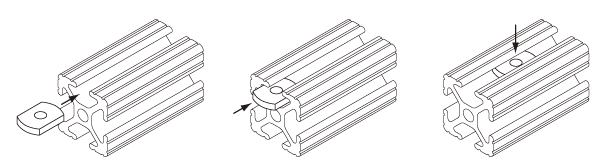
TIP: To make assembly easier, before sliding into the slot put all the components together first and screw into the slide-in t-nut 1-2 turns. Then slide the assembly into position and tighten.
NOTE: The slide-in t-nut is only able to be end loaded. This means more can not easily be added after construction.
Drop-In T-Nuts
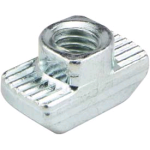
Drop-in T-Nuts are designed to load straight into the opening of the T-slot, then rotate until engagement. The width of a Drop-in T-Nut must be less than the T-slot opening dimension.
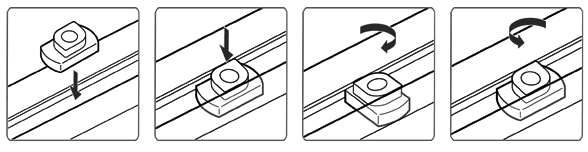
TIP: These nuts slide once they are in place. Use a screw to aid insertion. Screw in 1-2 turns and then drop the nut into the t-slot. Rotate and gently unscrew.
NOTE: These are great for those times when an extra fastener is need after construction. Drop-in and roll-in (below) can be used post construction.
Spring Loaded Roll-in T-Nuts

Roll-in T-Nuts are unique due to their ability to load in the T-slot from the face of the profile. A rolling or rotating motion is performed to install these in the T-slot.
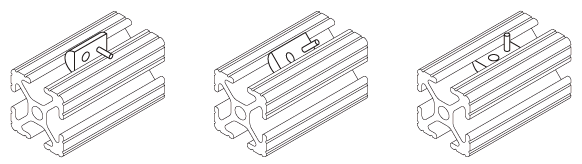
These t-nuts also have a spring and a small ball that stops them from slipping once inserted and before fastening. This makes them ideal for vertical constructions. Once inserted they can be positioned and then the assembly fixed and fastened.
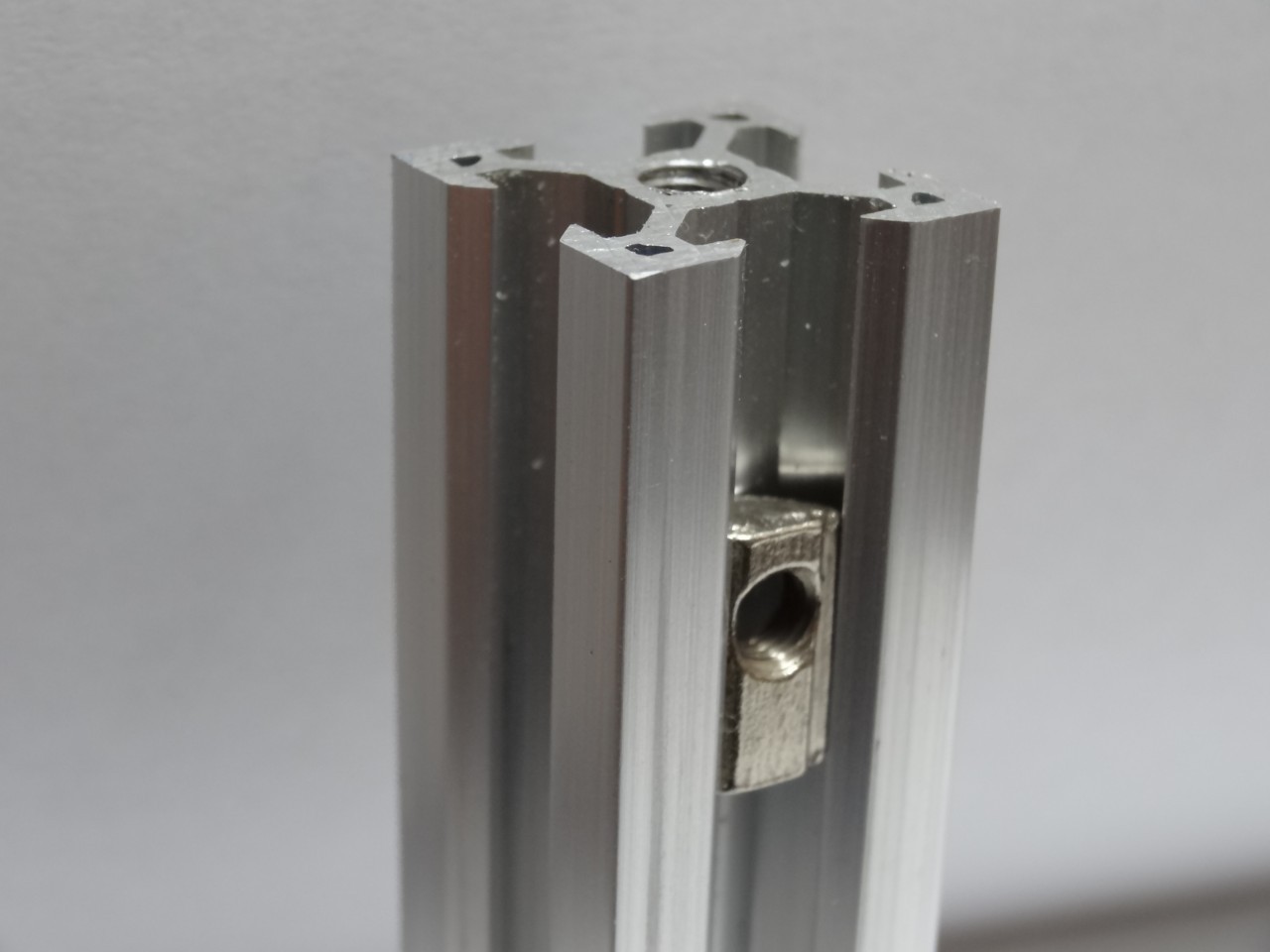
TIP: Use a screw to help roll in the t-nut. Screw in 1-2 turns and use as a lever when inserting and positioning the t-nut.
JOINING BRACKETS/PLATES
Joining plates come in many shapes and sizes. They allow for joining two or more lengths of v-slot using the plate, t-nuts and screws.
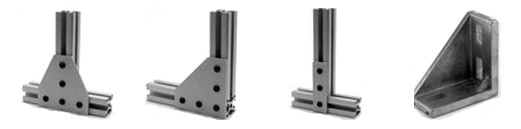
Plates are generally used to connect 2 or more lengths using one surface to fasten. Brackets use an angle connection to join (most commonly 90º) two lengths and are usually fastened inside.

Above is a 90º external bracket. Note the 2 screws fastening it to the v-slot. Below is an internal bracket. Note the 2 grub screws fastening it to the v-slot.
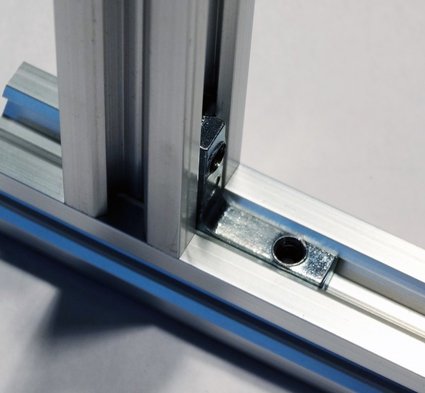
TIP: When cutting v-slot for end fastening, make sure your cut is square. This reduces “wobble” in the construction and increases rigidity.
PANELS AND DOORS
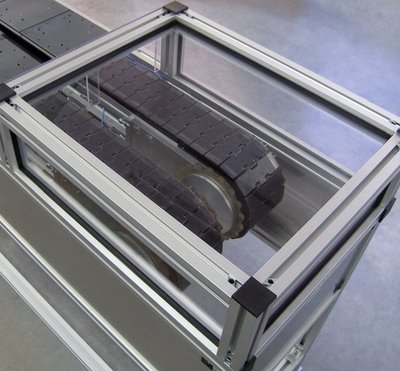
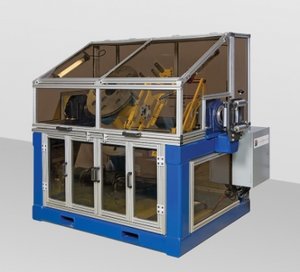
Using v-slot it is possible to create enclosed volumes such as containers, boxes and cabinets using hinges, panels, brackets and handles.
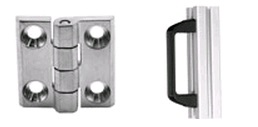
The v-slot can be used to enclose panels to make solid walls or barriers.
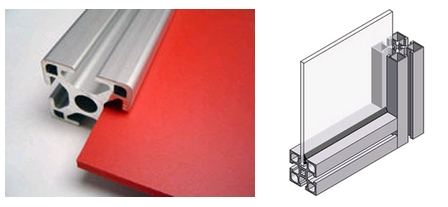
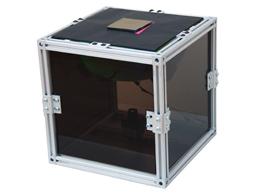
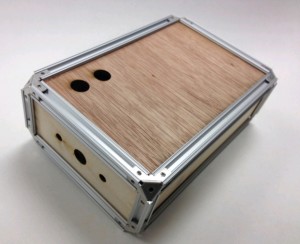
This method is often used for screening and machine guards.
MOUNTING PLATES
Of course with v-slot various plates can be mounted to give almost unlimited functionality:
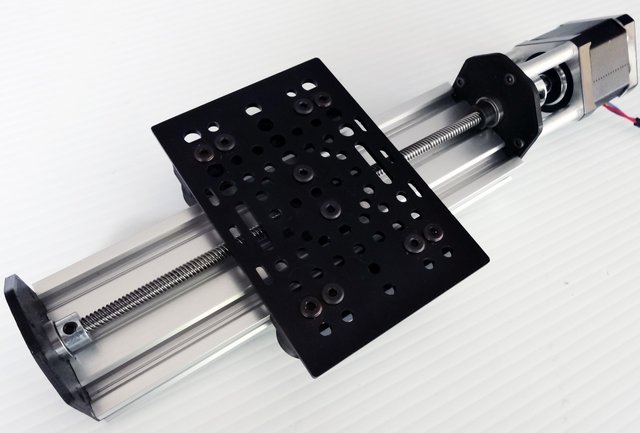
Stepper motors can be mounted to the ends of the v-slot turning a length into a linear motion system. Note the 2 threaded rod plates on each end of a length of v-slot:
AND MORE …
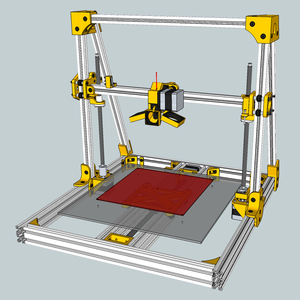
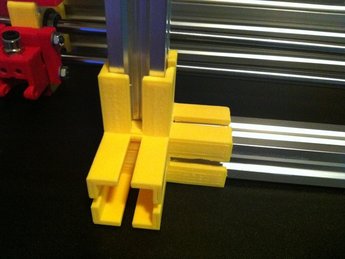
Using 3D printing even more possibilities come alive.