What is a Timing Pulley?
Timing pulleys? They’re the unsung heroes in the maker’s workshop. Simple yet crucial, they keep things running smoothly from car engines to printing presses. In this blog post, we discuss the nuts and bolts of timing pulleys we offer at Maker Store and how you can use them for your projects.
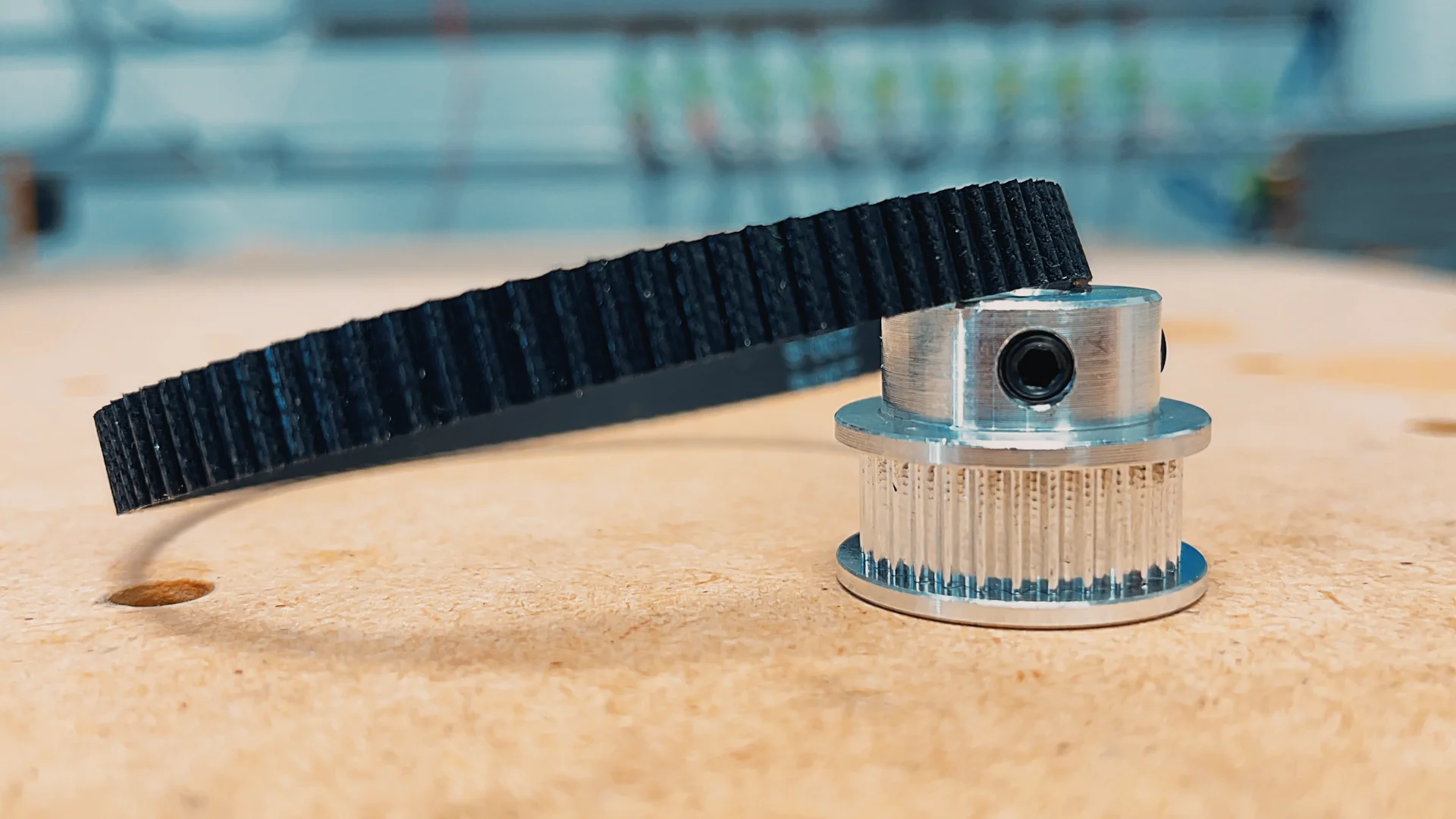
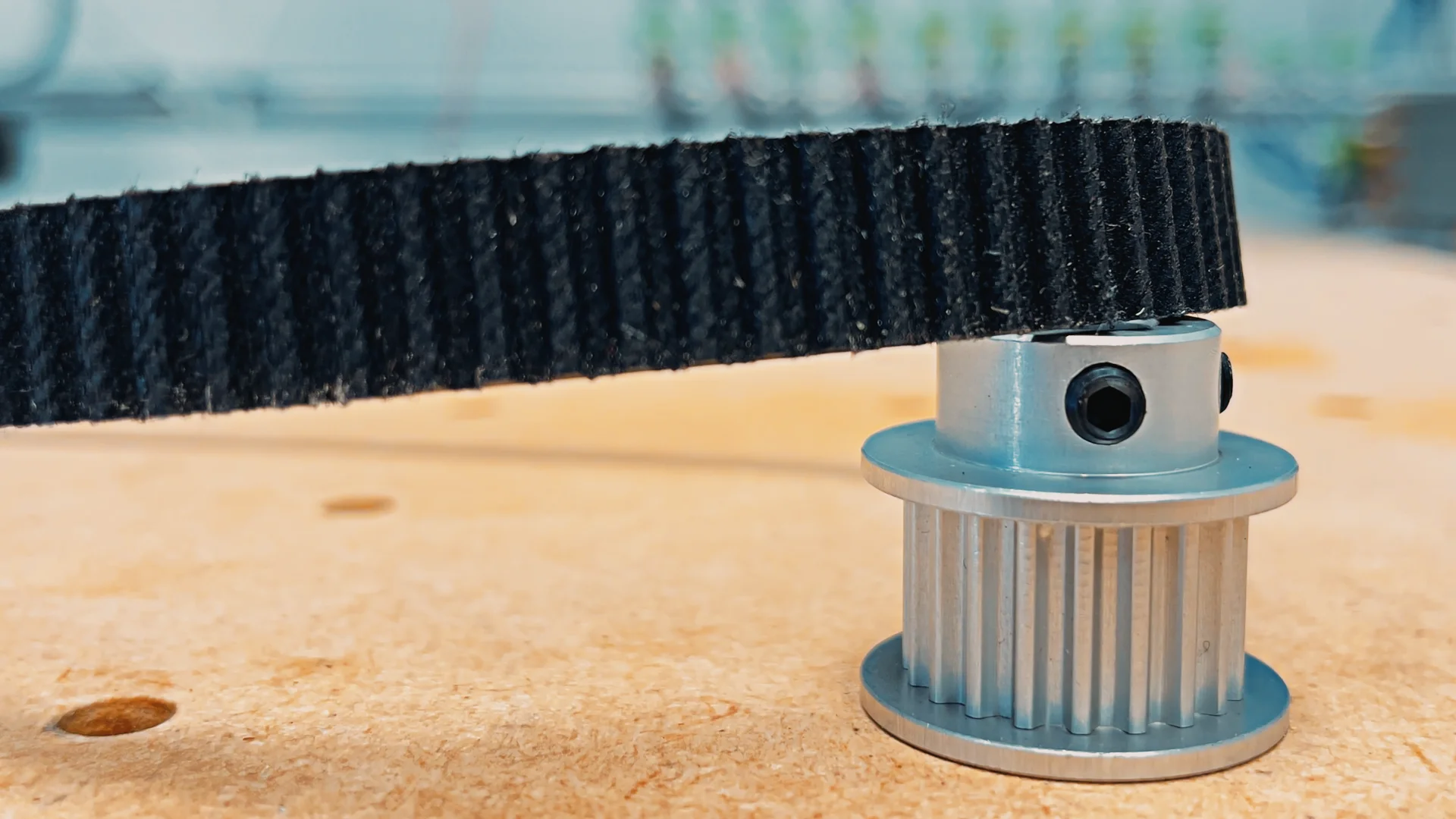
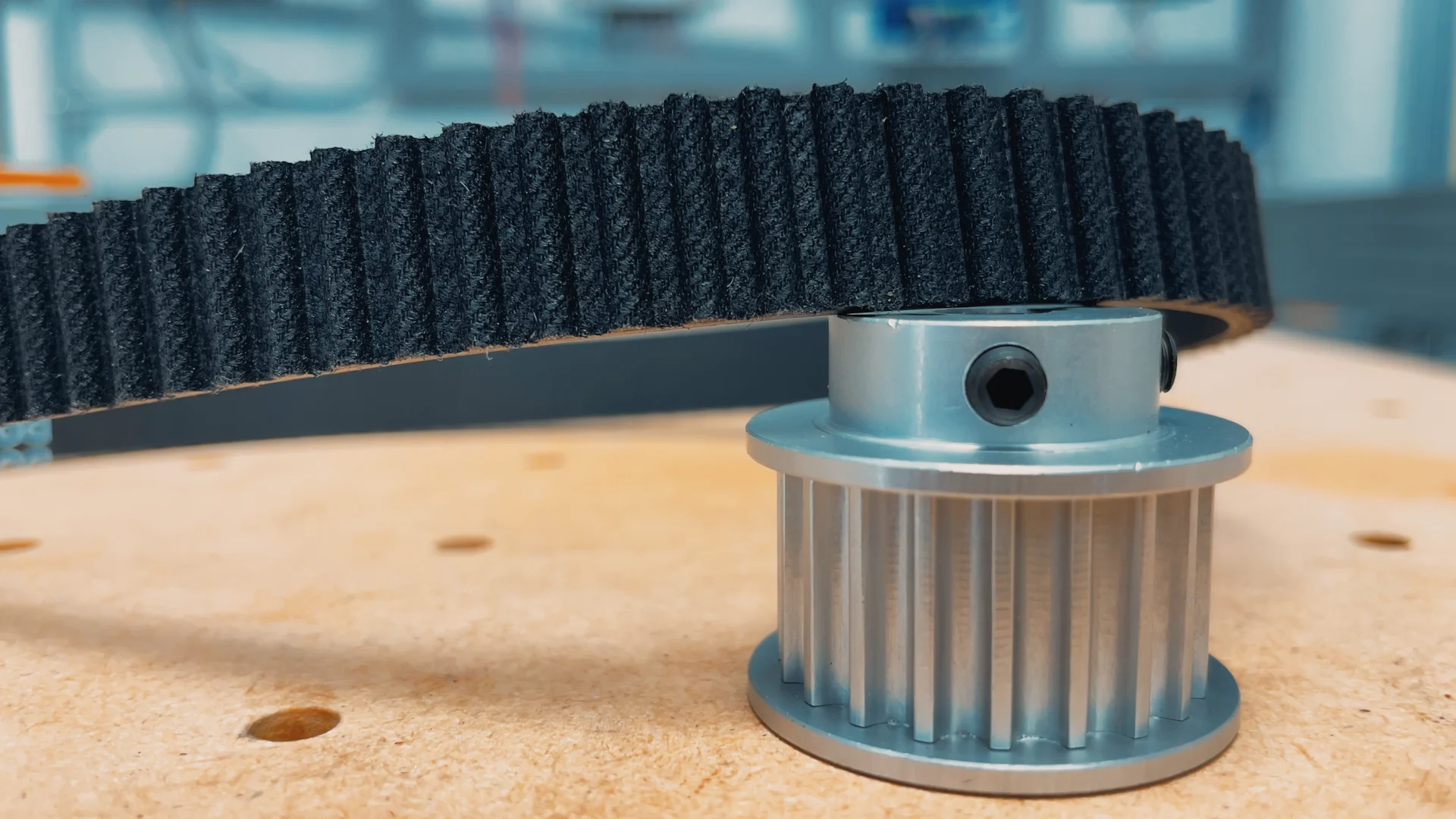
Timing pulleys, often called toothed or synchronous pulleys, precisely transmit rotational motion as mechanical devices. They feature teeth on their circumferences that mesh with toothed belts, creating a positive engagement that eliminates slippage and maintains precise timing between the pulley and the driven component.
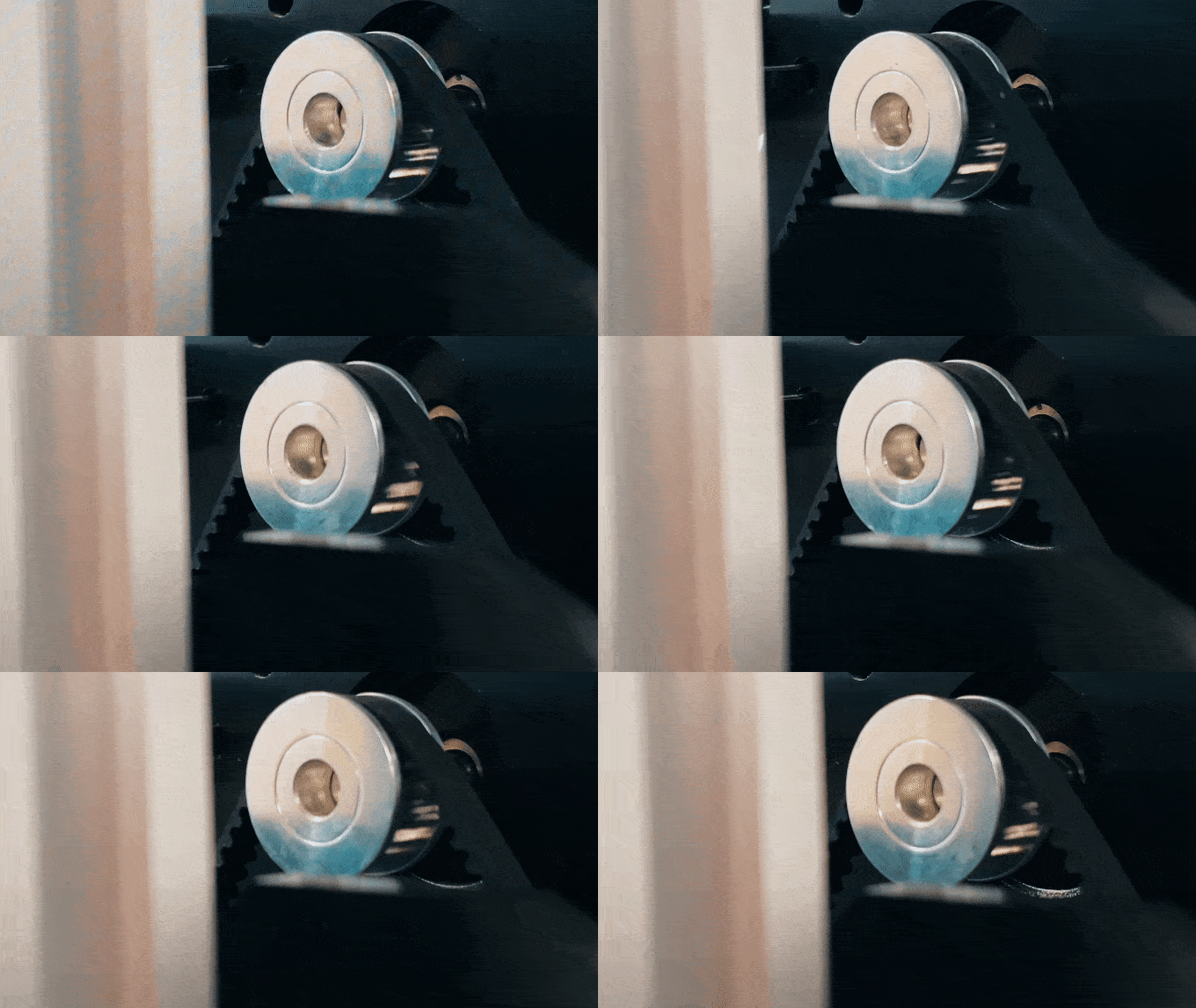
Functions of Timing Pulleys:
Positioning and Repeatability: Timing pulleys are crucial for achieving precise positioning of components in various machines and devices. This is essential in applications such as CNC machining, 3D printing, and robotics, where accurate and repeatable movements are required.
Power Transmission: Timing pulleys efficiently transmit power from one shaft to another without the risk of slipping. When paired with toothed belts, these can convert rotational motion of the motor shaft to linear motion ( along an extrusion).
Reducing Backlash: Timing pulleys help minimise backlash, which is the unwanted play or movement that can occur in mechanical systems when reversing direction. Their toothed design ensures a positive engagement between the pulley and the belt, reducing backlash to a minimum.
Speed Control: By using pulleys of different sizes and tooth counts, timing pulleys allow for speed control in mechanical systems. Changing the ratio of pulley sizes alters the speed at which the driven component operates relative to the driving component.
Timing Pulley Applications:
- CNC Machining: CNC machines rely on timing pulleys to control the movement of cutting tools or workpieces, ensuring accurate and repeatable machining processes.
- 3D Printing: Timing pulleys control the movement of the print head and the build platform in 3D printers, ensuring precise material layering.
- Automotive Industry: Timing pulleys are integral to an engine’s operation, controlling the timing of the intake and exhaust valves. This ensures optimal engine performance and fuel efficiency.
- Printing Industry: In printing presses, timing pulleys play a critical role in maintaining the precise movement of paper and print heads, resulting in high-quality, error-free prints.
Maker Store offers various timing pulleys, and we’ve listed their differences below:
| Tooth Profile and Pitch | Accuracy and Precision | Applications | |
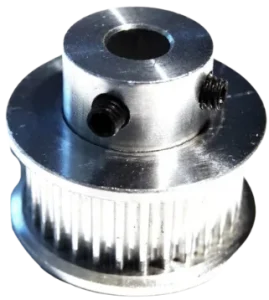
| GT2 Timing Pulley
|
|
|
|
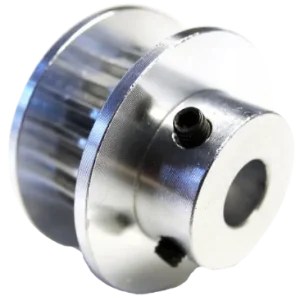
| GT3 Timing Pulley
|
|
|
|
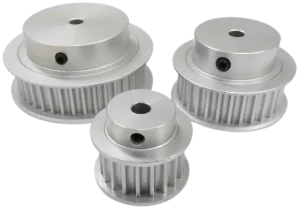
| HDT5M Timing Pulley
|
|
|
|
Timing Belt Compatibility:
Each timing pulley pairs with a specific timing belt that matches its tooth profile and pitch. For instance, you use GT2 pulleys with GT2 belts, GT3 pulleys with GT3 belts, and HDT5M pulleys with HDT5M belts.
Resolution Table:
A resolution table for timing pulleys can help you determine the number of steps or increments needed for precise movement in a given application. The steps depend on the microstepping setting of the stepper motor, number of teeth and pitch of the pulley. Based on our recommended microstepping of 1/8, the resolutions for GT2, GT3 and HTD5M pulleys
| Number of Teeth | GT2 – Resolution (mm) | GT3 – Resolution (mm) | HTD5M – Resolution (mm) |
| 20 | 0.025 | 0.038 | 0.063 |
| 30 | 0.038 | 0.056 | 0.094 |
| 40 | 0.05 | 0.075 | 0.125 |
| 60 | 0.075 | 0.113 | 0.188 |
If you are using a different micro-stepping, use the below formula:

Steps – The number of steps will depend on the type of stepper motor used. The most common stepper motor found is a bipolar stepper motor, which has 200 steps per revolution. A Three-phase stepper motor has 300 steps per revolution.
Pitch – The pitch of a toothed pulley refers to the distance between corresponding points on adjacent teeth or the distance between tooth centers. For GT2 timing belts, the Pitch is 2mm, for GT3 timing belts, the Pitch is 3mm, HTD5M timing belt, the Pitch is 5mm
Microsteps – The microsteps of a stepper motor refer to the number of steps a full step is subdivided into. For example, a common microstepping setting is 1/8 microstepping, which divides each full step into 8 microsteps. So, to find the resolution (mm) based on ⅛ microstepping setting using above formula, we will use Microsteps = 8.
Conclusion:
Though small in size, timing pulleys play a crucial role in precision engineering. These toothed wonders ensure the smooth and synchronised operation of countless mechanical systems, from automobiles to 3D printers. Anyone involved in machinery and manufacturing must understand the functions, types, and applications of timing pulleys. While the precision of a 3D-printed object often amazes us, and the efficiency of your car’s engine consistently impresses, it’s crucial to remember the underlying components. Hence, the next time you admire these feats, be sure to give a nod of appreciation to the often overlooked, yet pivotal, timing pulley.